
What’s In This Guide
- What Does Office Decommissioning Actually Involve?
- Why Lease Turnover Terms Make Decommissioning a Business Requirement
- Common Decommissioning Mistakes That Put Deposits and Timelines at Risk
- Office Decommissioning Checklist and Timeline: 90 Days to Key Return
- Coordination Factors: Patching, Repairs, and Vendor Scheduling
- When Should a Business Bring In an Office Decommissioning Team?
- Frequently Asked Questions
- Ready to Plan Your Office Decommissioning?
Businesses searching for commercial office movers near the end of a lease often assume the job ends once desks and boxes leave the building. It does not. Office decommissioning, the work that restores a leased space to its required condition, covers furniture removal, IT disconnection, cabling, asset disposal, documentation, and a final landlord walkthrough.
Skipping or rushing these steps is one of the most common reasons businesses lose part of a security deposit or face holdover charges after their official move-out date. A written checklist, tied to a realistic timeline, keeps decommissioning from becoming an afterthought.
Quick Facts
- Leases typically require “broom clean” or better condition at surrender, a standard often disputed between tenants and landlords.
- Decommissioning covers furniture removal, IT disconnection, cabling, asset disposal, documentation, cleaning, and landlord walkthroughs.
- A 90-day planning window is common for sequencing decommissioning tasks without rushing the final weeks.
- Data-bearing IT equipment should be properly sanitized before leaving the facility.
- Retired electronics should go to certified recyclers rather than unverified disposal vendors.
What Does Office Decommissioning Actually Involve?
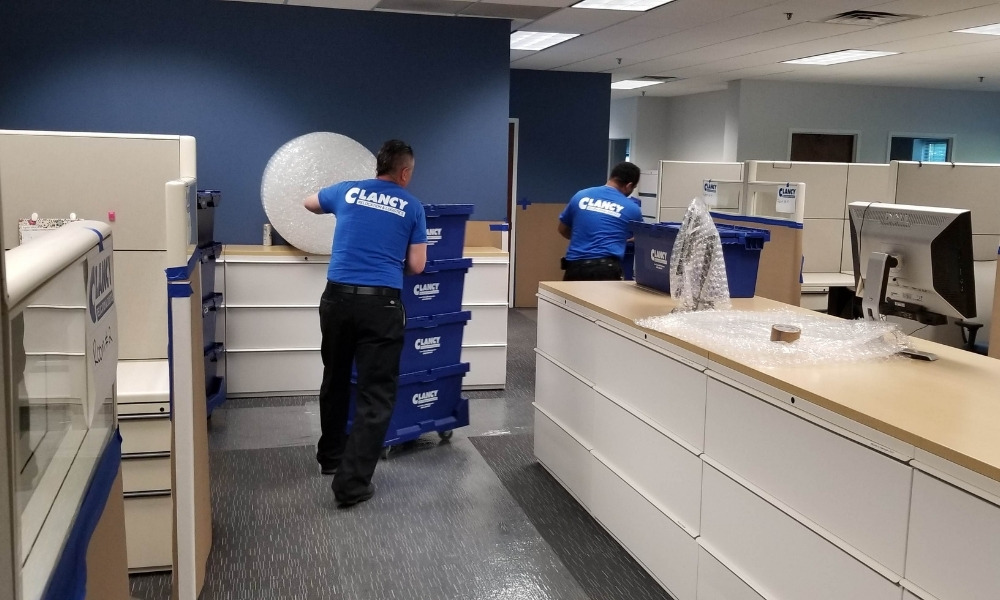
Office decommissioning is the structured process of clearing, disconnecting, and restoring a leased space after furniture and staff have relocated. It includes removing remaining assets, disconnecting IT infrastructure, coordinating disposal, and documenting the space before landlord inspection.
The work typically falls into these categories:
- Furniture and fixture removal, including items not moving to the new location.
- IT and telecom disconnection, covering servers, workstations, phones, and network hardware.
- Cable and low-voltage wiring removal, where required by the lease or building standard.
- Asset disposal and recycling for furniture, electronics, and surplus equipment.
- Documentation, including photos, condition reports, and disposal or recycling records.
- Final cleaning to meet the lease’s surrender standard.
- Landlord or property manager walkthrough, conducted before the formal move-out inspection.
- Lease-condition verification, confirming the space matches what the lease requires at surrender.
Each category can involve a different vendor or internal team, which is why a single written checklist matters more in decommissioning than in a standard office relocation.
IT and asset disposal carry the most technical risk of the group, which may require temporary storage at an NYC warehouse staging facility during transport.
Data-bearing drives and devices should be sanitized using the Clear, Purge, or Destroy methods defined in NIST’s federal guidelines for secure media sanitization methods before equipment leaves the building, and retired electronics should go to a recycler verified under an accredited standard rather than an unverified hauler.
Why Lease Turnover Terms Make Decommissioning a Business Requirement
Lease Turnover Is Not Optional
Lease turnover is not optional once a commercial lease ends. Most leases include a surrender clause specifying the condition the space must be in, and failing to meet it can trigger charges deducted from the security deposit or billed separately.
The “Broom Clean” Standard
The most common surrender standard is “broom clean,” but that phrase is frequently misunderstood. Expectations can vary from one lease to the next, so tenants should not assume a light sweep satisfies every landlord’s standard.
A Planned Process, Not a Last-Minute Task
Property managers generally favor a structured check-in schedule with outgoing tenants to confirm decommissioning progress well before the final inspection. That approach reflects how lease turnover tends to be treated industry-wide as a planned process rather than a last-minute cleanup.
The Risk of Treating Decommissioning as an Afterthought
Businesses that treat decommissioning as a checklist item attached to the move, rather than its own project, are generally the ones more likely to face disputes over the condition of the space at key return.
Common Decommissioning Mistakes That Put Deposits and Timelines at Risk
Several recurring mistakes accounted for in an office relocation risk register explain most decommissioning disputes and delays.
- Underestimating IT and cabling disconnection time. Servers, phone systems, and structured cabling often take longer to remove than furniture and require coordination with an IT vendor or internal staff.
- Skipping documented data sanitization. Leaving data-bearing drives or devices behind without verified sanitization creates a security risk that outlasts the lease itself.
- Assuming the landlord will dispose of leftover furniture and assets. Most leases hold the tenant responsible for removing its own property, and abandoned items can be billed back at the tenant’s expense.
- Skipping a walkthrough before the formal inspection. A pre-inspection walkthrough with the landlord or property manager surfaces issues while there is still time to fix them.
- Missing manufacturer or leasing company return deadlines. Leased copiers, servers, or furniture on a vendor agreement often have separate return requirements that run on a different timeline than the lease itself.
Office Decommissioning Checklist and Timeline: 90 Days to Key Return
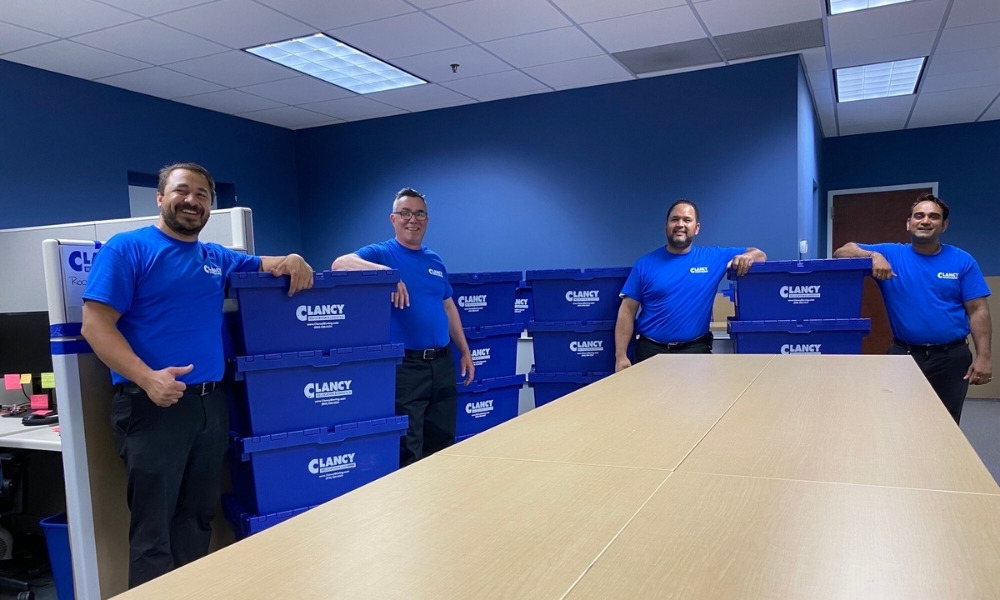
A phased timeline keeps decommissioning tasks from stacking up in the final week before move-out.
90 to 60 Days Before Move-Out
- Review the lease’s surrender clause and confirm the required return condition in writing.
- Inventory furniture, IT equipment, and fixtures—applying principles like order profiling in 3PL fulfillment workflows to categorize assets—to determine what moves, what is disposed of, and what returns to a vendor.
- Confirm whether any leased equipment, such as copiers or servers, has a separate manufacturer or vendor return process.
- Schedule IT staff or a vendor for data backup and planning around system disconnection.
60 to 30 Days Before Move-Out
- Confirm disposal and recycling vendors, accounting for NMFC freight classification changes, and prioritizing those certified under EPA-recognized electronics recycling standards for retired equipment.
- Begin data sanitization on retired drives and devices using documented methods.
- Notify the building management of the planned move-out date and confirm access windows for decommissioning work.
- Identify any patching, repair, or alteration-removal obligations named in the lease, and confirm which contractor will handle that work.
Final 30 Days
- Disconnect and remove remaining IT and telecom equipment.
- Remove furniture, fixtures, and any remaining assets not already relocated.
- Complete cabling removal if required by the lease or building standard.
- Conduct a final cleaning to meet the surrender standard named in the lease.
Move Week and Key Return
- Walk the space with a decommissioning checklist before the landlord’s formal inspection.
- Document the space with photos and a written condition report.
- Collect and retain disposal, recycling, and data sanitization records.
- Complete the landlord walkthrough and return keys or access credentials.
Coordination Factors: Patching, Repairs, and Vendor Scheduling
Who Typically Handles Patching and Repairs
Patching, electrical work, and structural repairs are typically outside the scope of a decommissioning or moving provider unless a lease explicitly transfers that responsibility. These tasks usually require a licensed contractor or the landlord’s own maintenance team.
Where a Decommissioning Provider Fits In
What a decommissioning provider can reasonably support is scheduling coordination. Aligning furniture removal, IT disconnection, and asset pickup, alongside any necessary port-to-Manhattan freight drayage and delivery, around a separate repair contractor’s timeline keeps the overall project on track, even when the trade work itself is handled by a different vendor.
Confirming Responsibility Before Move-Out
Businesses should confirm, in writing, which party is responsible for patching nail holes, repairing cable penetrations, or restoring altered walls before move-out. Lease language on this point varies, and assuming it is included in a mover’s scope is a common source of last-minute disputes.
Low-Voltage Cabling Requirements
The same principle applies to low-voltage cabling. Some buildings require cabling to be removed back to the source, while others allow it to remain if properly capped and labeled. Confirming the building standard with property management before move week prevents a contractor from being scheduled for work that was never required or discovering late that required cabling removal was never scheduled at all.
When Should a Business Bring In an Office Decommissioning Team?

When Internal Staff Can Handle It
A dedicated decommissioning team becomes useful once a move involves more than furniture relocation, such as IT disconnection, multi-vendor asset disposal, or a compressed timeline before lease end. Hiring experienced commercial office movers allows facility teams to delegate these complex tasks. Internal facilities staff can often manage a small, single-floor decommission without outside help.
When Outside Coordination Pays Off
Larger spaces, multiple floors, or a short window between move-out and lease expiration usually benefit from outside coordination. A team experienced in office decommissioning can sequence furniture removal, IT disconnection, and disposal logistics so that nothing is left behind when the final walkthrough happens.
Why a Written Responsibility Breakdown Matters
This phase is also the point where a written responsibility breakdown pays off. Naming which party handles furniture removal, which handles IT disconnection, and which confirms the final walkthrough keeps internal staff, the landlord, and outside vendors working from the same expectations instead of discovering gaps during the last week of the lease.
Frequently Asked Questions
How is office decommissioning different from a standard office move?
A standard move focuses on getting furniture and equipment to the new location, while decommissioning focuses on what gets left behind. It covers disconnecting systems, clearing remaining assets, and bringing the space back to whatever condition the lease calls for.
Do office decommissioning services apply to every type of commercial lease?
Most commercial leases include some kind of return-condition requirement, so a version of decommissioning applies to nearly any lease turnover. The scope just tends to vary depending on lease length, building type, and how much the space was altered.
What happens to furniture that is not reused at the new location?
Furniture that isn’t moving forward is generally sorted for donation, resale, or recycling as part of office asset disposal. Which option makes sense usually comes down to the condition of the pieces and what local partners are able to take.
Who typically leads the final walkthrough before a lease ends?
The walkthrough is usually a shared effort between the outgoing business and the landlord or property manager, sometimes with a decommissioning provider involved as well. Having everyone look at the space together tends to head off disagreements before the formal inspection.
Is decommissioning necessary when relocating within the same building?
Even a move to another suite in the same building can trigger decommissioning tasks if the old space has to be handed back. The scope is often smaller, but documentation, cleaning, and asset removal generally still apply.
Ready to Plan Your Office Decommissioning?
Clancy Relocation & Logistics supports responsible office decommissioning, offering comprehensive office decommissioning services that include asset disposal, manufacturer equipment returns, and certified electronics recycling as part of a commercial relocation project.
Partnering with professional commercial office movers ensures these tasks are coordinated under one plan, helping businesses meet lease-end requirements without last-minute scrambling.
Reach out to us to start planning your office decommissioning timeline today.
Related Posts