
What’s In This Guide
- What Is Reverse Logistics in a 3PL Setting?
- Why Returns Processing Matters for NYC Businesses
- Common Returns Processing Mistakes and Risk Points
- The Reverse Logistics Workflow: Receipt to Restocking
- Key Reverse Logistics Terms Defined
- Returned-Item Decision Tree
- Factors That Affect Returns Processing Timelines and Coordination
- When to Bring In a 3PL Logistics Partner for Reverse Logistics in NYC
- Frequently Asked Questions
- Ready to Talk Through Your Warehousing and Inventory Needs?
Managing returns can be a complex part of the supply chain, especially when operating in a dense market like New York City. Every returned item creates a ripple effect, moving backward from the customer to the warehouse, where it requires careful inspection, grading, and disposition.
A structured 3PL logistics process can help streamline this operational challenge by ensuring that returned inventory is evaluated, sorted, and routed to the appropriate disposition path.
Quick Facts
- A structured reverse logistics workflow can include seven stages: authorization, receiving, inspection, grading, quarantine when applicable, disposition, and inventory update.
- An RMA (Return Merchandise Authorization) provides a formal reference for a returns workflow and helps prevent unauthorized items from being processed without review.
- Retailers projected that 15.8% of annual U.S. retail sales would be returned in 2025, with online return rates estimated at 19.3%.
- Quarantine may be required for damaged, recalled, disputed, or otherwise unresolved items before a final disposition decision is made.
- NYC’s limited warehouse footprint and dense delivery zones can make dock scheduling and space allocation especially important in returns processing.
What Is Reverse Logistics in a 3PL Setting?

Reverse logistics is the structured process of moving goods backward through the supply chain, from the customer or endpoint to a warehouse, manufacturer, or other point of disposition. In a 3PL logistics arrangement, a third-party provider may manage activities such as receiving, inspection, grading, inventory disposition, and restocking on a client’s behalf.
Forward logistics moves products toward the customer, while reverse logistics manages products moving back through the supply chain and determines their next disposition, such as restocking, refurbishment, liquidation, or disposal.
Why Returns Processing Matters for NYC Businesses
Poor returns handling can increase costs through devalued inventory, delayed restocking, and inefficient use of warehouse space. In NYC, space constraints can make unmanaged returns particularly disruptive to operations.
Returns can represent a significant cost center for retailers. According to the 2025 Retail Returns Landscape report from the National Retail Federation and Happy Returns, a UPS company, retailers projected $849.9 billion in returns, with online return rates estimated at 19.3% of sales. Processing that volume efficiently can help reduce delays and limit capital tied up in returned inventory.
Businesses managing returns internally in NYC often run into the same constraints:
- Limited on-site space to separate sellable, damaged, and quarantined inventory
- Dock and elevator access windows that restrict how quickly returns can be received
- Staff pulled from other tasks to handle inspection and sorting
- Inconsistent documentation that makes inventory counts unreliable
A warehousing and logistics partner with dedicated space and structured intake processes can help manage returns volume while reducing disruption to core operations.
Common Returns Processing Mistakes and Risk Points
No Formal Return Authorization Process
Without a formal return authorization process, items may arrive at a facility with no advance notice, no reason code, and no record tying the return to an original order. This can make tracking and disposition slower and increase the risk of accepting unauthorized or fraudulent returns.
Mixing Quarantine and Sellable Inventory
Damaged, recalled, or disputed items stored alongside sellable stock can create inventory accuracy problems and increase the risk of items being mistakenly returned to available inventory. Returned items that have not passed inspection should remain clearly segregated from inventory approved for resale.
Delayed Grading
Delays in grading can reduce the resale value of time-sensitive inventory, including electronics, seasonal goods, and certain perishable products. They can also create backlogs as additional returns continue to arrive.
Inaccurate Inventory Updates
If a warehouse management system is not updated promptly after a disposition decision, a business risks overselling inventory that has been quarantined or discarded or maintaining inaccurate inventory records for items that were not restocked.
The Reverse Logistics Workflow: Receipt to Restocking

Step 1: Return Authorization (RMA)
The process typically starts before the item arrives. When an RMA process is used, a Return Merchandise Authorization is issued, documenting the reason for return, the original order details, and any special handling notes. This authorization becomes the reference record for the stages that follow.
Step 2: Receiving the Returned Item
Once the item arrives at the facility, staff log it against the RMA number or applicable return authorization record and confirm the shipment matches what was authorized. Unauthorized or unexpected returns get flagged for separate review rather than processed automatically.
Step 3: Inspection
Trained staff physically examine the item for damage, missing components, tampering, or signs of use. This stage determines which disposition path the item can realistically follow.
Step 4: Grading
Inspected items are assigned a condition grade, typically ranging from new or like-new to damaged or non-functional. Grading criteria vary by product category, and the grade assigned here helps inform the disposition decision in Step 6.
Step 5: Quarantine (When Applicable)
Items that are damaged, subject to a manufacturer recall, involved in a customer dispute, or otherwise unresolved are segregated from sellable inventory for further review. This quarantine process helps prevent unresolved items from accidentally reentering available inventory before a final decision is made.
Step 6: Disposition Decision
Based on the inspection results, condition grade, business rules, and available provider capabilities, each item is routed to an appropriate outcome, such as restocking, refurbishment, liquidation, donation, or disposal. The inventory disposition process is typically guided by preset rules tied to product category and condition.
Step 7: Restocking or Inventory Update
Items cleared for resale are logged back into inventory, and the warehouse management system is updated accordingly. Client portals and online inventory tools, when available, can give businesses visibility into returned items, their condition, and the inventory available for resale.
A structured intake process also supports accurate receiving and inventory tracking across warehousing and distribution operations.
Key Reverse Logistics Terms Defined
What Is an RMA?
An RMA, or Return Merchandise Authorization, is a formal authorization that allows a customer or business partner to return an item to a facility. It typically includes a unique reference number, reason code, and relevant handling instructions, providing a reference point for the stages that follow.
What Is Inventory Disposition in Returns Processing?
Inventory disposition is the decision made about what happens to a returned item after inspection and grading. Common outcomes include restocking for resale, refurbishment, liquidation to a secondary market, donation, or disposal.
What Is Refurbishment in a Returns Context?
Refurbishment refers to repairing, cleaning, or restoring a returned item to a condition where it can be resold, often at a reduced grade or price point compared to new inventory.
What Does Quarantine Mean for Returned Inventory?
Quarantine is a segregated status or holding process for returned items that cannot yet be assigned a final disposition. This may include damaged goods, recalled products, or items involved in an active dispute. Keeping these items separate from sellable inventory helps maintain inventory accuracy.
Returned-Item Decision Tree
The path a returned item takes depends on inspection and grading results, along with applicable business rules and provider capabilities.
|
Inspection Result |
Grading Outcome |
Disposition Path |
|
No damage, original packaging |
New or like-new |
Restock for resale |
|
Minor wear, functional |
Used, good condition |
Restock at reduced grade or refurbish |
|
Damaged but repairable |
Damaged, repairable |
Refurbishment queue |
|
Damaged, non-repairable |
Non-functional |
Liquidation or disposal |
|
Recall, safety issue, or active dispute |
Unresolved |
Quarantine hold |
Items in the quarantine hold category do not move forward until the dispute is resolved, the recall status is confirmed, or a compliance review is complete.
Factors That Affect Returns Processing Timelines and Coordination
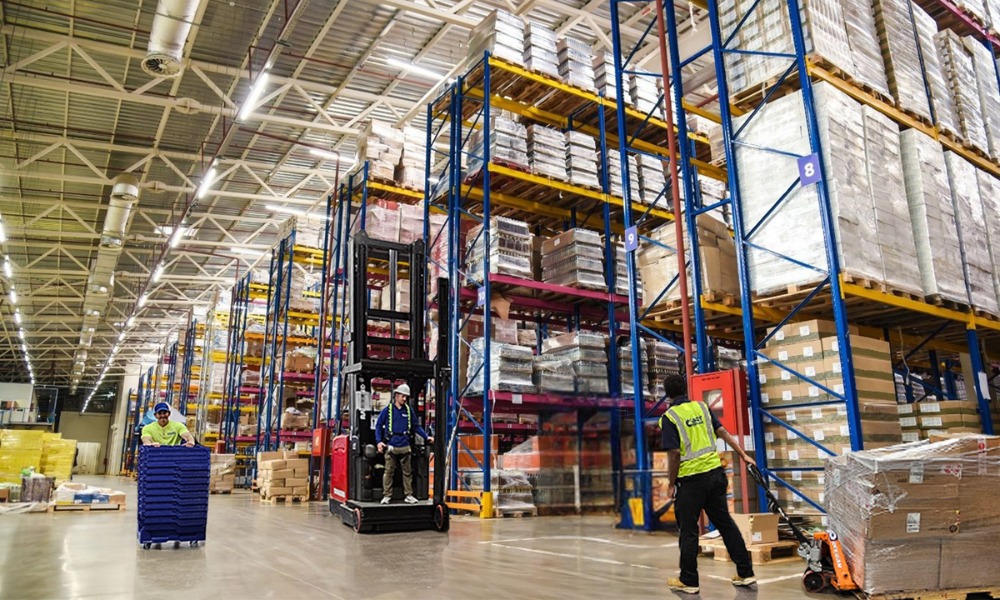
Returns processing speed depends on several operational variables, and NYC facilities may face urban access and space constraints that can complicate coordination.
- Inspection complexity: Electronics and equipment with multiple components may require more inspection time than simpler, single-piece products.
- Grading criteria by category: Some product categories require more detailed condition standards, which can increase processing time per item.
- Facility access and dock scheduling: Limited loading dock windows, freight elevator reservations, and building-specific delivery rules can affect how quickly returned freight reaches the processing area.
- Documentation accuracy: Missing or incomplete RMA information creates delays while staff track down order details before processing can begin.
For businesses operating in New York City, facility access planning is an important part of returns coordination. A warehousing partner with established dock-scheduling and freight-receiving procedures can help reduce delays associated with dense urban logistics environments.
When to Bring In a 3PL Logistics Partner for Reverse Logistics in NYC
A business may benefit from outsourcing returns handling when volume, space, or documentation demands begin to strain internal resources. Signs that it may be time to evaluate a 3PL logistics partner include:
- Returns volume regularly exceeds available on-site storage or staging space
- Staff assigned to other roles are pulled to handle inspection and sorting
- Inventory counts become unreliable due to inconsistent tracking
- Quarantine and sellable stock start getting mixed due to space constraints
- Grading and disposition decisions are delayed long enough to reduce resale value
At this stage, a 3PL provider with appropriate warehouse capacity, structured intake processes, and inventory tracking systems may provide additional returns-processing capacity without an immediate expansion of the business’s in-house space.
READ MORE: When to Outsource Logistics Operations to a 3PL in NYC
Frequently Asked Questions
What is the difference between reverse logistics and returns management?
Returns management generally covers the end-to-end handling of a return, including customer-facing activities such as authorization and refund processing. Reverse logistics focuses more specifically on the physical and operational movement of returned goods, including receiving, inspection, grading, quarantine when needed, disposition, and inventory updates.
What should a business define before outsourcing reverse logistics to a 3PL?
Before outsourcing returns, businesses should establish clear rules for inspection, grading, quarantine, restocking, refurbishment, liquidation, donation, and disposal. They should also define reporting requirements, inventory update procedures, and which decisions the 3PL can make without additional approval.
What reporting should a 3PL provide for returned inventory?
Returns reporting may include items received, inspection results, condition grades, disposition decisions, restocked quantities, quarantined inventory, and products removed from sellable stock. The reporting structure should align with the business’s inventory systems and operational needs.
Can a 3PL handle returns from multiple sales channels?
Depending on its systems and capabilities, a 3PL may be able to process returns from e-commerce platforms, retail locations, marketplaces, distributors, and other sales channels. Businesses should confirm how return authorizations, SKUs, order information, and disposition rules will be matched across each channel.
Who handles the customer refund when a 3PL processes a return?
The physical return and the customer refund are usually handled as separate parts of the process. A 3PL may receive, inspect, grade, and update the returned inventory, while the retailer or its commerce platform handles the refund or exchange. The business should define what return status triggers the financial side of the process.
Ready to Talk Through Your Warehousing and Inventory Needs?
Businesses managing growing returns volume need a logistics partner with real warehouse capacity and structured processes.
Clancy Relocation & Logistics operates warehousing and distribution facilities across New York and Connecticut, built to support the receiving, tracking, and inventory management work that returns processing depends on.
Contact us to discuss warehousing space, freight receiving, and inventory management options suited to your business.