
What Readers Need To Know
The best freight partner in Connecticut is the provider whose operating model fits the shipment. LTL usually suits smaller palletized loads that share trailer space. Truckload can fit dedicated, higher-volume movement. Expedited and specialized providers address unusual timing or handling requirements. An integrated 3PL becomes more useful when warehousing, inventory, carrier coordination, and distribution must work together.
A Connecticut terminal, a broad service list, or a familiar company name does not by itself identify the right choice. Origin, destination, freight class, dimensions, access conditions, delivery window, and the responsibilities accepted by each provider all affect the decision.
Use this guide to:
- Build a shipment profile before requesting prices.
- Compare LTL with full truckload based on trailer use, volume, directness, timing, and accessorial requirements.
- Separate ordinary freight from expedited, international, temperature-sensitive, oversized, or high-value shipments.
- Understand whether a company is operating transportation, arranging it, forwarding freight, or coordinating a larger logistics program.
- Decide when a carrier is enough and when an ongoing 3PL relationship may reduce coordination work.
There is no independent evidence supporting a universal ranking of Connecticut freight companies. “Best” is more useful as a fit decision than as a statewide number-one label.
What “Best Freight Company” Means in Connecticut
For a Connecticut shipper, “best” should describe the match between the shipment and the provider’s operating model. A company handling four pallets from Bridgeport to Massachusetts has a different need from a manufacturer moving a full trailer, a hospital receiving specialized equipment, or a retailer storing inventory for repeated distribution.
That distinction matters because freight companies do not all perform the same role. The Federal Motor Carrier Safety Administration, or FMCSA, distinguishes a motor carrier that operates commercial motor vehicles from a broker that arranges transportation without transporting freight or assuming cargo responsibility. A freight forwarder consolidates or distributes shipments and assumes transportation responsibility under the applicable authority. These definitions do not describe every commercial 3PL arrangement, but they show why two quotes can represent very different relationships. FMCSA’s definitions of motor carrier, broker, and freight forwarder authorities provide a useful starting point.
The route changes the answer as well. A local Connecticut delivery may involve different terminals, appointments, and accessorials than a shipment crossing state lines. An international move adds forwarding, customs, documentation, and multiple handoffs. A recurring inventory program adds receiving, storage, order preparation, consolidation, and distribution to the transportation decision.
Provider-authored service pages illustrate this range without proving that one company is superior to every other option. Old Dominion documents LTL along with national, expedited, and global freight services. Estes maintains a Connecticut LTL terminal page. BTX describes domestic air, ground, LTL, FTL, expedited, residential, and specialized services and identifies a Connecticut corporate address. Those examples are useful because they represent different possible paths, not because they establish a universal winner.
The first decision, then, is not which logo appears highest on a list. It is whether the shipment needs a shared-trailer carrier, dedicated truckload movement, unusual equipment or timing, or coordinated logistics beyond a single delivery. Once that operating model is clear, provider comparisons become more meaningful.
Build the Shipment Profile Before Comparing Providers
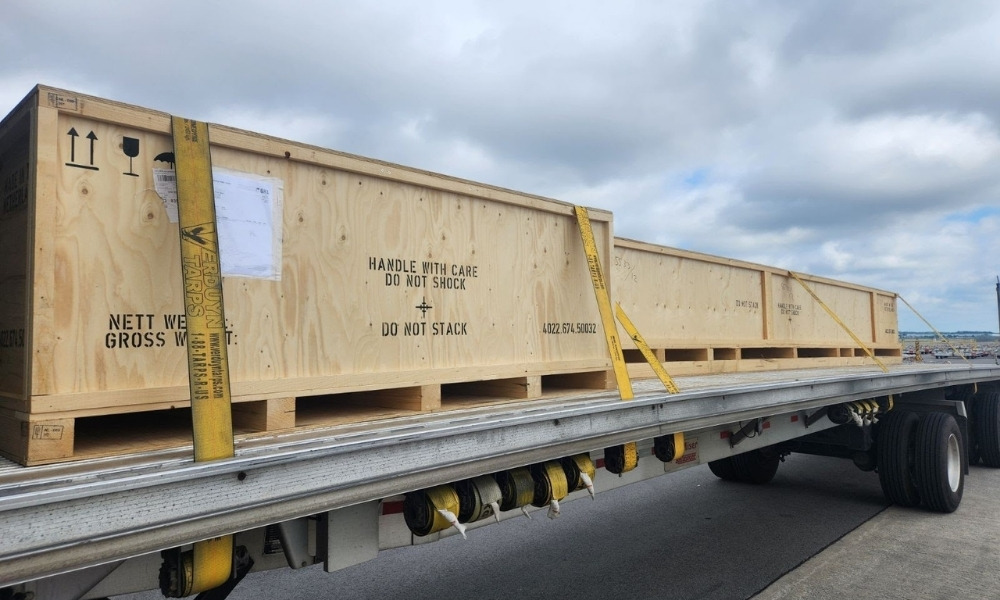
A freight quote is only as useful as the shipment information behind it. Before comparing Connecticut freight companies, document the physical shipment, the route, the timing, and the work required at each end. This turns a general request into a proposal that can be reviewed on comparable terms.
Start with the basic movement:
- Origin and destination, including ZIP codes.
- One-time or recurring frequency.
- Number of pallets, pieces, or cartons.
- Weight of each unit and total shipment weight.
- Length, width, height, and stackability.
- Commodity description, density, and freight class when applicable.
- Declared or replacement value.
- Requested pickup date and delivery window.
Dimensions deserve particular attention. A shipment can occupy more trailer space than its weight suggests. A dense pallet, a fragile crate, and a tall non-stackable piece may receive different handling and pricing even when their total weights are similar. The provider may also need photographs, packaging details, or a description of how the freight will be loaded.
Then record the conditions at pickup and delivery. A liftgate may be needed where a loading dock is unavailable. Appointment delivery can affect scheduling. Inside delivery, residential access, stairs, narrow streets, limited receiving hours, or a construction site may create additional work. Refrigeration, temperature control, hazmat handling, rigging, installation, and white-glove service should be identified before a quote is prepared, not after a truck is assigned.
These details prevent a common failure in freight buying: comparing a complete quote with an incomplete one. One proposal may include fuel, appointment service, storage, or inside delivery while another prices only the linehaul. A lower initial figure is not necessarily a lower total cost if the scope is different.
Clancy Relocation & Logistics uses the same principle when we evaluate a commercial move or logistics request. The operating need may include freight management, storage, distribution, dedicated transportation, specialized transportation, or white-glove delivery rather than transportation alone. Our role and current availability must be confirmed against the specific shipment, lane, timing, and handling requirements.
A good shipment profile also makes the conversation more productive. It gives each provider the same facts, highlights risks before pickup, and creates a written record against which accessorials and service expectations can be reviewed.
Choose Between LTL and Full Truckload
LTL, or less-than-truckload, is generally designed for smaller palletized shipments that do not require an entire trailer. The freight shares trailer space with other shipments and may move through a terminal network. That model can suit a business shipping several pallets rather than a full trailer, especially when the shipment can be handled through standard dock procedures.
Full truckload uses a dedicated trailer for the movement. It may make more sense when the volume occupies most of a trailer, when the shipment needs direct movement, or when reducing transfers and shared handling is important. The decision still depends on dimensions, density, loading conditions, delivery timing, and the quote. A shipment should not be classified by pallet count alone.
LTL and truckload are therefore not simply two price levels for the same service. They involve different trailer-utilization decisions, routing patterns, handoffs, timing expectations, and accessorial structures. The right comparison asks what the freight needs and how much of the transportation process the shipper wants to manage.
For Connecticut LTL comparisons, Old Dominion and Estes are reasonable candidates to place on a shortlist. Old Dominion’s published materials document its LTL offering and broader national, expedited, and global freight services. Old Dominion also lists a service center in Milford, Connecticut. Estes provides an official LTL terminal page for the New Haven–Bridgeport area. These sources support considering both companies for Connecticut LTL research. They do not establish that either carrier is best for every shipment, has capacity on every lane, or will provide a particular rate or transit result.
A terminal listing is one useful fact, but it is not a complete service determination. Confirm whether the relevant origin and destination are covered for the requested date. Verify the quoted transit for the actual freight class, dimensions, access conditions, and delivery appointment. Ask how the carrier handles liftgate service, residential or limited-access delivery, inside delivery, reclassification, detention, storage, and other accessorials.
Tracking should also be compared at the shipment level. Ask what events are visible, when status updates are posted, and who receives exception notifications. A general tracking page does not answer how a particular shipment will be monitored or escalated.
Clancy Relocation & Logistics can be relevant when an LTL or truckload movement is part of a broader commercial program. Our published Bridgeport logistics information describes warehousing, distribution, freight management, drayage, dedicated transportation, specialized transportation, white-glove delivery, and coordination for Connecticut and New York businesses. That does not mean Clancy Relocation & Logistics directly operates every mode or can confirm every lane. Current capacity, pricing, mode ownership, and terms need to be established for the shipment.
The practical choice often looks like this:
- Choose LTL when the freight is palletized, the volume is below a dedicated trailer, and standard terminal-based handling fits the shipment.
- Consider truckload when the shipment requires a dedicated trailer, substantial trailer space, fewer shared handoffs, or a more direct operating plan.
- Request both options when the shipment is near a mode threshold or when accessorials could change the total cost.
- Involve a 3PL when transportation is only one part of a recurring storage, inventory, consolidation, or distribution requirement.
No mode should be selected from a generic transit promise or a single headline rate. The written proposal should explain what is included and what remains conditional.
When Expedited, International, or Multimodal Service Changes the Shortlist
A general LTL comparison may be unsuitable when the shipment has a narrow delivery window, an international destination, several transportation legs, or a requirement for air or specialized handling. Expedited ground, air freight, ocean freight, forwarding, customs coordination, and multimodal transportation each add decisions that should be addressed before booking.
Timing is more than a requested delivery date. Confirm the pickup cutoff, weekend and holiday handling, airport or port handoff, customs-document requirements, appointment windows, and the point at which the delivery commitment begins. If a shipment moves through multiple parties, identify each handoff and the person responsible for exceptions.
BTX Global Logistics is one provider-authored example to consider for this type of shortlist. Its published domestic service information describes air, ground, LTL, FTL, expedited, residential, and specialized services, along with international logistics offerings elsewhere in its service presentation. The available evidence does not independently verify its assets, subcontracting practices, exact Connecticut coverage, rates, or service-level commitments. Treat BTX as a candidate for further diligence, not as proof that one provider directly operates every advertised mode.
The same discipline applies to any multimodal provider. Ask whether the company is acting as a carrier, broker, freight forwarder, or another type of logistics coordinator for each leg. Confirm who controls the booking, who issues the transportation documents, how liability is allocated, and how claims are handled when responsibility crosses from one operating party to another.
For international freight, add documentation and border requirements to the shipment profile. The appropriate party may need to coordinate customs information, export or import paperwork, port or airport handling, and the final domestic delivery. These requirements can change the provider shortlist even when the physical freight resembles a domestic pallet shipment.
Clancy Relocation & Logistics may also be considered when expedited or multimodal transportation is connected to warehousing, receiving, distribution, drayage, or a larger relocation program. We can discuss the coordination need and confirm what services, modes, partners, and terms apply. We do not treat a broad capability description as a guaranteed delivery commitment.
The strongest proposal makes the operating chain visible. It identifies the planned mode, the parties involved, the handoffs, the cutoff times, the escalation contact, and the delivery expectation that can actually be supported for the shipment.
Match Specialized Freight With Specialized Capability

Some freight should not be evaluated as ordinary palletized cargo. Oversized or heavy-haul equipment, flatbed freight, refrigerated goods, temperature-sensitive materials, high-value assets, fragile items, medical equipment, and white-glove deliveries can require equipment and procedures that a standard LTL comparison does not establish.
For oversized and heavy freight, review dimensions, axle or weight considerations, loading method, route restrictions, permits, escorts when applicable, and site access. Ask who performs the loading and unloading, whether rigging is required, and whether the provider has assessed turning space, dock height, overhead clearance, and surface conditions. A carrier that accepts ordinary pallets may not have the equipment or authority for a complex lift or oversize movement.
Temperature-sensitive freight requires a documented handling plan. The conversation should cover the required temperature range, monitoring, packaging, transfer points, dwell time, contingency procedures, and receiving conditions. “Refrigerated” or “temperature-controlled” on a service list is not enough to establish that the provider can meet the specific product requirement.
High-value and fragile freight calls for equal precision. Identify the packing method, custom crating, blocking and bracing, handling points, inspection process, delivery access, and claims procedure. A white-glove service may also include room-of-choice placement, unpacking, debris removal, installation, or other work that must be listed clearly in the scope.
Medical, laboratory, technology, and other sensitive equipment may require site surveys, deinstallation, rigging, calibration coordination, or a carefully sequenced delivery. The equipment’s value and operational importance should not be treated as a substitute for a written handling plan.
Clancy Relocation & Logistics approaches specialized relocation through planning and coordinated handling. Our broader services include specialized transportation, white-glove delivery, warehousing, distribution, freight management, and commercial coordination. Those stated capabilities may fit a project that combines transportation with storage, installation, or destination handling. They do not establish that every project, piece of equipment, permit, or movement is eligible. We confirm the equipment, site, lane, procedures, and protection terms before accepting the work.
For specialized freight, compare capability evidence rather than category labels. Request equipment details, permits and authority where relevant, loading and rigging responsibilities, appointment procedures, insurance or cargo-protection terms, and the name of the person who will manage exceptions. Ordinary LTL availability is not proof of specialized capability.
Carrier, Broker, Forwarder, or 3PL?
The name on a quote does not always tell you how transportation will be performed. A motor carrier may operate the commercial vehicles. A broker may arrange transportation with another carrier and, under the FMCSA distinction, does not transport the freight or assume cargo responsibility in the same way. A freight forwarder may consolidate or distribute shipments and assume transportation responsibility. The legal and practical relationship should be clear before the shipment moves.
The FMCSA explanation of these authorities is useful for checking the basic distinctions. It is not a complete taxonomy of every 3PL business model. Some logistics programs combine warehousing, transportation management, forwarding, brokerage, distribution, and other services under one commercial relationship.
The distinction affects more than terminology. It can determine who selects the operating carrier, who provides the transportation documents, who receives a claim, who communicates a delay, and which terms apply to the cargo. A provider may coordinate the movement while a different company supplies the truck. That arrangement is not automatically unsuitable, but it should be disclosed.
A direct carrier can be appropriate for a defined, one-time load. A broker may be useful when capacity, equipment, or lane options need to be arranged across a broader carrier base. A freight forwarder can fit consolidated or international movements. A 3PL becomes more relevant when the requirement continues beyond one delivery.
Recurring logistics creates a different workload. Inventory may arrive at a warehouse, be counted and stored, consolidated with other goods, prepared for delivery, redistributed to several locations, or coordinated with drayage and multiple carriers. In that setting, the provider is helping manage an operating process rather than simply quoting a truck.
Clancy Relocation & Logistics is a conditional 3PL candidate for that kind of coordinated requirement. Our stated services include warehousing, receiving, distribution, freight management, LTL and FTL coordination, drayage, dedicated transportation, specialized transportation, and white-glove delivery. We can discuss a program when a business needs storage, inventory-related handling, consolidation, distribution, or multiple-carrier coordination in addition to freight movement.
Ask every provider to separate what it operates directly from what it arranges through partners. The answer should cover transportation legs, warehouse work, drayage, specialized handling, and final delivery. It should also identify the accountable contact and the escalation process. A clear relationship model makes the quote easier to evaluate and the transition easier to manage.
Where Clancy Fits the Connecticut Decision
Clancy Moving fits the Connecticut freight decision most naturally when a shipment is part of a larger relocation or logistics program. We do not claim to be the universal best freight company in Connecticut. Our relevant question is narrower: whether our coordinated services match the work your business needs to manage.
Clancy Relocation & Logistics describes warehousing, receiving, distribution, freight management, LTL and FTL coordination, drayage, dedicated transportation, specialized transportation, and white-glove delivery for Connecticut and New York businesses. Our Bridgeport 3PL logistics and warehousing service is positioned for businesses that need more than an isolated transportation transaction.
That model can be useful for recurring inventory or project-based work. Goods may need to be received, documented, stored, consolidated, prepared for distribution, and delivered to multiple destinations. A business may also need freight management alongside warehouse coordination, rather than maintaining separate conversations with a warehouse, a carrier, a drayage provider, and a final-delivery team.
Our warehousing and logistics services describe a broader combination of storage, distribution, freight management, LTL and FTL, drayage, dedicated transportation, and related logistics support. These are Clancy Relocation & Logistics services stated for discussion and evaluation. They are not evidence of universal coverage, current inventory capacity, lowest pricing, guaranteed transit, or direct operation of every mode.
Drayage is another situation where coordination may matter. A container moving between a port or rail yard, a warehouse, and a final destination can involve appointments, equipment, access restrictions, and several parties. Our drayage service information describes coordinated port, rail-yard, container, and warehouse movements. Current equipment, permits, port access, direct operation, and timing must be confirmed for the particular movement.
The benefit of a coordinated model is accountability for the plan. A dedicated coordinator can help keep receiving instructions, inventory details, delivery sequencing, and carrier communication connected. That does not guarantee an outcome or eliminate the need for clear customer decisions. It gives the project a defined process for identifying requirements and resolving open details.
Clancy Relocation & Logistics may be a practical fit when:
- Freight moves repeatedly rather than as a single isolated load.
- Inventory needs receiving, storage, tracking, consolidation, or redistribution.
- A business is coordinating several carriers or delivery destinations.
- Drayage connects containers, ports, rail yards, warehouses, and final delivery.
- Commercial assets, FF&E, equipment, or other items need transportation and destination handling.
- A relocation requires freight management alongside warehousing or specialized delivery.
A direct LTL or truckload carrier may still be the better fit for a straightforward one-load shipment. For Clancy Relocation & Logistics, the appropriate next step is a consultation that confirms the origin, destination, freight profile, current lanes, available capacity, pricing, mode ownership, delivery expectations, and protection terms.
The Connecticut Freight Quote and Due-Diligence Checklist

A sound comparison begins with identical information. Send each provider the same shipment profile, requested dates, delivery conditions, and scope of work. Ask for a written quote that separates transportation from additional charges so the proposals can be reviewed on equal terms.
1. Put the shipment and lane in writing
Include the following details in the request:
- Legal shipper and consignee names.
- Pickup and delivery addresses, ZIP codes, and site contacts.
- Pallet count, piece count, weight, dimensions, density, and freight class.
- Commodity, packaging, stackability, and declared value.
- Pickup date, delivery window, appointment needs, and recurrence.
- Loading and unloading conditions, including docks, stairs, narrow access, or limited hours.
- Temperature, hazmat, rigging, installation, white-glove, or other specialized requirements.
Do not rely on a commodity description such as “equipment” or “pallets” when the freight is oversized, fragile, temperature-sensitive, or unusually valuable. Specific information helps a provider determine whether the requested mode and equipment are appropriate.
2. Request an itemized quote
The written proposal should identify linehaul, fuel, accessorials, storage, detention, appointment service, liftgate, inside delivery, residential or limited-access charges, and any other known fees. If a charge depends on conditions at pickup or delivery, the quote should say so.
For a recurring program, request the warehouse and distribution scope separately. Confirm receiving, inventory handling, storage, order preparation, consolidation, deconsolidation, cross-docking, delivery, and retrieval charges where they apply. A single blended number can conceal important differences in scope.
3. Confirm timing and tracking
Ask for the expected pickup and delivery windows for the actual lane and freight profile. Avoid treating a general transit guide as a guarantee. Confirm cutoff times, weekend or holiday exceptions, appointment requirements, terminal transfers, and the process for a delayed shipment.
Ask what tracking events will be visible, who receives notifications, and who serves as the escalation contact. For multimodal or brokered freight, identify how updates move between the operating parties.
4. Verify the provider and operating authority
Confirm the provider’s legal identity and determine whether it is acting as a motor carrier, broker, freight forwarder, or another logistics coordinator. Use FMCSA resources to review the applicable operating authority and registration information. A directory listing or an old search result is not enough to establish current operation.
Ask for the name of the carrier that will actually perform each transportation leg. If subcontracting or partner coordination is involved, ask how the provider manages handoffs, claims, tracking, and service exceptions.
5. Review claims and cargo protection
Ask which terms govern loss or damage, what documentation is required, how claims are submitted, and what limits or exclusions apply. Physical protection at a loading site is not the same as cargo protection or valuation coverage. The proposal should identify the applicable protection level and the party responsible for the relevant terms.
For a Clancy Relocation & Logistics project, we review the appropriate protection discussion as part of the consultation. We do not describe protection as an absolute guarantee, and current terms require confirmation for the specific service and shipment.
6. Test specialized eligibility
If the freight is oversized, refrigerated, medical, fragile, high-value, or intended for white-glove delivery, ask for capability details rather than accepting a general service description. Confirm equipment, permits, loading and rigging, temperature monitoring, appointment delivery, installation, and receiving procedures.
A provider should be able to explain which work it performs directly and which work it assigns to a qualified partner. The answer should be specific to the shipment, not limited to a list of available modes.
7. Choose the relationship that matches the work
After the diligence is complete, the selection usually becomes clearer. Use a carrier for a defined load that fits its operating model. Use a specialized or expedited provider when timing, dimensions, temperature, value, or handling requirements make ordinary freight service insufficient. Use a 3PL when recurring storage, inventory, consolidation, distribution, drayage, or multi-carrier coordination is part of the need.
For businesses in Connecticut, Clancy Relocation & Logistics can discuss the third path when a coordinated logistics program is more appropriate than a single freight booking. We will need to confirm current lanes, capacity, pricing, mode ownership, timing, and terms before presenting a recommendation.
FAQ
Best freight companies in Connecticut?
The best freight partner in Connecticut is the one whose operating model matches the shipment. LTL fits smaller palletized loads, truckload fits dedicated high-volume movement, specialized or expedited providers fit exceptional timing or handling, and an integrated 3PL fits situations where warehousing, inventory, carrier coordination, and distribution must function together. Compare the exact lane, freight details, accessorials, tracking, authority, claims terms, and current written proposal rather than relying on a universal ranking.