
Choosing a regional freight company starts with the shipment, not a universal ranking. The right provider depends on the lane, service model, volume, timing, handling requirements, and coordination the movement requires.
A pallet moving from Connecticut to New York City may fit a direct less-than-truckload carrier. Maine-origin freight bound for Massachusetts may fit a New England-focused provider. A commercial rollout involving storage, inventory, port transfers, and final delivery may require coordinated logistics rather than one linehaul booking.
This guide compares those operating models without ranking them. Coverage, transit times, rates, capacity, pallet limits, and service commitments remain provider-stated or quote-dependent. Confirm the details for the exact origin, destination, freight profile, and pickup window before booking.
What Readers Need To Know
- The right regional freight partner depends on the lane, service model, volume, timing, handling requirements, and coordination needed.
- A comparison should separate direct motor carriers from brokers, freight forwarders, and third-party logistics providers.
- A. Duie Pyle, RIST-AMA, Estes, Turner’s Express, and XPO represent different documented operating models and geographic examples. Their stated coverage and transit information require lane-specific confirmation.
- Clancy Relocation & Logistics is a candidate when freight also involves warehousing, receiving, inventory handling, distribution, freight management, drayage, dedicated transportation, or specialized delivery. Our current lanes, capacity, pricing, and operating model require confirmation for each movement.
What “Regional Freight Company” Means In This Guide
“New England” means Connecticut, Maine, Massachusetts, New Hampshire, Rhode Island, and Vermont. This guide also considers the Connecticut-New York corridor, including movements between Connecticut and New York and selected connections to nearby Northeast markets.
A provider’s facility, service map, or listing in one state does not establish service throughout the region. Origin and destination ZIP codes matter more than a broad label such as “Northeast.” A move from Bridgeport to Manhattan is different from a move from Hartford to Buffalo. Maine-origin freight should not be evaluated by assuming that a Connecticut terminal offers the same pickup or delivery terms.
The provider’s role also matters:
- Motor carrier: A company that transports freight with motor vehicles. Its equipment, terminal network, and authority should be understood before freight is tendered.
- Freight broker: A party that arranges transportation between a shipper and a motor carrier. The broker may coordinate the movement without physically transporting the freight.
- Freight forwarder: A transportation intermediary that arranges movement and assumes responsibility for the shipment within the authority and service model that applies to its operation.
- Third-party logistics provider, or 3PL: A business that coordinates one or more logistics functions, which may include transportation, warehousing, inventory, fulfillment, or distribution. Some 3PL structures are hybrids, so the provider should explain which responsibilities it performs directly and which it arranges through other companies.
The Federal Motor Carrier Safety Administration’s definitions of motor carriers, brokers, and freight forwarders provide a useful starting point. The FMCSA definitions do not describe every hybrid 3PL model or establish the authority of a specific provider. Those details require current provider and shipment review.
Clancy Relocation & Logistics can be considered when the work extends beyond one freight move into warehousing, inventory, distribution, freight management, drayage, dedicated transportation, or specialized delivery. Our role, availability, and transportation arrangements should be confirmed for the project.
Start With The Shipment, Not The Company Name
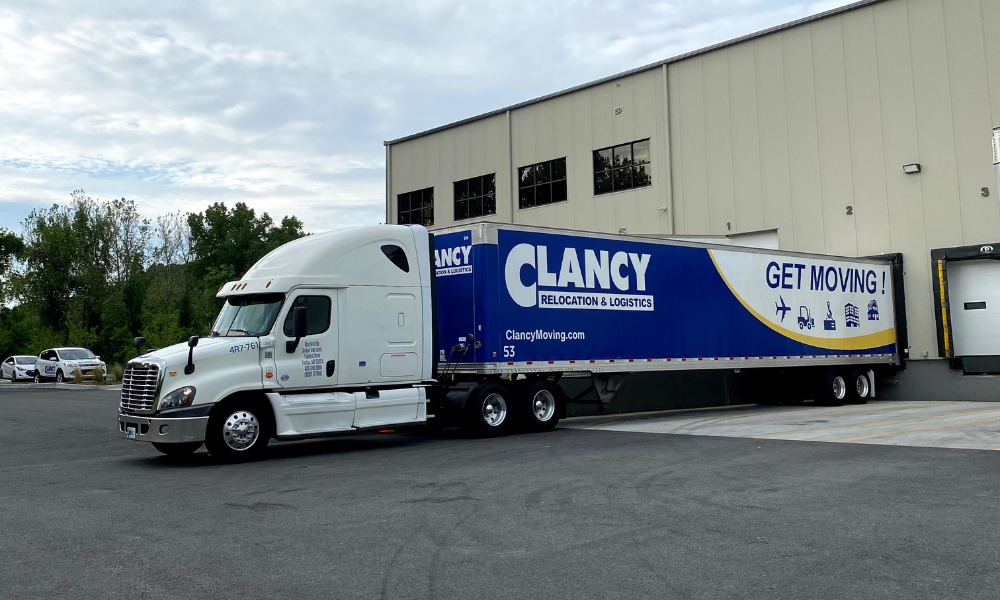
A company name is only a starting point. Record the movement in operational terms so each provider receives the same information.
Define the lane precisely
Record the complete origin and destination, including ZIP codes when available. Note the states, metro corridors, and any port or airport connection. Identify pickup appointments, delivery appointments, limited-access sites, and receiving-hour restrictions.
Confirm that each prospective provider explicitly serves both ends of the lane. A Connecticut service center may support particular Connecticut routes. It does not, by itself, prove coverage to every New York destination, New England state, or rural delivery point.
Select the service model
The main transport categories address different shipment requirements:
- Less-than-truckload, or LTL: Shared transportation for palletized freight that does not require a full trailer. Pricing and handling depend on weight, dimensions, freight class, origin, destination, and accessorial services.
- Full truckload, or FTL: A trailer-scale or dedicated movement using most or all of the available trailer capacity. The comparison may involve equipment, loading requirements, delivery timing, and whether the movement is recurring.
- Expedited freight: A time-sensitive service model that requires the provider to define pickup, transit, delivery, and appointment terms. “Expedited” is not a substitute for a written commitment.
- Drayage: Movement between a port, rail facility, container yard, warehouse, or nearby delivery point. Drayage is often one link in a longer transportation chain.
- Freight forwarding: An arranged transportation service that may consolidate shipments and coordinate multiple legs. The forwarder should explain its responsibilities, documents, handoffs, and claims process.
- Coordinated logistics: A broader model that may combine receiving, storage, inventory control, transportation, order fulfillment, cross-docking, redistribution, and delivery.
For a straightforward pallet movement, compare direct LTL service first. When storage, inventory, drayage, or multiple deliveries are involved, compare the full coordination model as well.
Describe the freight and delivery conditions
A useful quote request includes pallet count, total weight, dimensions, freight class, stackability, and trailer-utilization needs. Include the contents and handling characteristics rather than relying on a description such as “commercial goods.”
Identify liftgate service, inside delivery, limited access, residential delivery, appointment requirements, hazardous materials, temperature-sensitive contents, oversized pieces, fragile or high-value items, and white-glove handling. These details can affect eligibility, price, equipment, staffing, and protection terms.
For a commercial project, add the number of stops, delivery sequence, receiving hours, installation or setup requirements, storage duration, and inventory documentation. A one-time pallet move and a multi-stop rollout create different coordination responsibilities.
Regional and Northeast LTL Options
The providers below are comparison examples, not a ranked list. Each entry is based on the provider’s published description of its services or geography. Published service areas, transit statements, pallet limits, and performance claims are not independent proof of a particular shipment outcome.
|
Provider |
Provider type |
Documented geography or network |
Documented services |
Best-fit scenario to investigate |
Confirm before booking |
|
A. Duie Pyle |
Northeast transportation and logistics provider |
Northeast-focused, with coverage and services stated by the provider |
LTL, truckload, dedicated contract services, warehousing, port services, and integrated supply-chain solutions |
LTL, truckload, storage, dedicated transportation, or port-related logistics |
Exact lane, available service, capacity, transit, accessorials, and terms |
|
RIST-AMA |
Regional LTL provider |
Provider-stated service in New York, Pennsylvania, New Jersey, Massachusetts, and Connecticut |
LTL, stated next-day and second-day services, liftgate, inside delivery, and hazmat-endorsed drivers |
Specified Northeast LTL lanes requiring regional service or additional handling |
Exact origin and destination, transit, pricing, terminal, hazmat requirements, and handling terms |
|
Estes |
Large LTL provider with a Connecticut service center |
Middletown, Connecticut service center and selected New Haven-Bridgeport next-day destinations published by the provider |
LTL service, including stated destinations such as New York City and Boston from the referenced Connecticut market |
A Connecticut-origin LTL movement to a published destination |
Exact ZIP codes, freight, pickup window, accessorials, and service conditions |
|
Turner’s Express |
New England-focused LTL provider |
Provider-stated Maine-origin service across New England, with stated second-day examples to Long Island, New York City, and New Jersey |
LTL, stated same-day pickup across much of Maine, next-day delivery throughout New England, and second-day service to selected New York and New Jersey markets |
Maine-origin freight that fits the published regional service pattern and pallet limits |
Origin-specific availability, current rates, the 2,000-pound pallet maximum, 75-inch height maximum, and exact transit |
|
XPO |
Large North American asset-based LTL provider |
North American network positioning stated by the provider |
LTL and broad network transportation services |
A shipper seeking network scale for a particular distribution program |
Connecticut-New York lane availability, transit, price, shipment eligibility, equipment, and accessorial terms |
|
Clancy Relocation & Logistics |
Coordinated logistics and warehousing provider |
Connecticut and New York commercial logistics capabilities stated by Clancy |
Warehousing, receiving, inventory handling, distribution, LTL and FTL coordination, freight management, drayage, dedicated transportation, and white-glove delivery |
Recurring, multi-stop, storage-linked, port-connected, or specialized commercial freight |
Exact lane, mode responsibility, capacity, pricing, storage terms, delivery sequence, and protection terms |
How to Interpret the Comparison
A. Duie Pyle is a broad Northeast comparison point. Its provider-authored description spans LTL, truckload, dedicated contract services, warehousing, port services, and integrated logistics. That mix may be relevant when freight is connected to storage or a larger supply-chain program. It does not establish availability for every lane, and provider-published performance statements should not be generalized to a specific shipment.
RIST-AMA is a plausible regional LTL option for specified Northeast lanes. Its published coverage includes New York, Pennsylvania, New Jersey, Massachusetts, and Connecticut. The provider also describes next-day and second-day service, liftgate, inside delivery, hazmat-endorsed drivers, and terminals including Wallingford, Connecticut, and Billerica, Massachusetts. Transit, pricing, special handling, and terminal applicability require confirmation for the exact lane.
Estes offers an LTL comparison point for Connecticut shippers. Its published information identifies a current Middletown, Connecticut service center and selected next-day destinations from the New Haven-Bridgeport area, including New York City and Boston. Other named destinations include Albany, Syracuse, Buffalo, and Philadelphia. This evidence covers one service center and selected destinations, not complete New York or New England coverage.
Turner’s Express is best treated as a New England-focused option, particularly for freight originating in Maine. The provider publishes same-day pickup across much of Maine, next-day delivery throughout New England, and second-day service examples to Long Island, New York City, and New Jersey. It also states a 2,000-pound maximum per pallet and a 75-inch height maximum. Those limits and examples require confirmation for the shipment.
XPO illustrates a large, asset-based North American LTL model. Network scale may matter for some freight programs, but the available evidence does not verify particular Connecticut-New York lanes, transit times, pricing, or shipment eligibility. Compare the exact movement against the same criteria used for regional providers.
Clancy Relocation & Logistics fits a different decision point. We coordinate transportation with warehousing, receiving, inventory organization, distribution, drayage, dedicated transportation, and specialized delivery when a commercial project includes those connected responsibilities. Our 3PL logistics and warehousing services describe receiving, inventory organization, distribution, LTL and FTL coordination, drayage, dedicated transportation, and white-glove delivery for Connecticut and New York businesses.
The result should be a conditional shortlist. One provider may fit a Maine-origin LTL lane. Another may offer a relevant Connecticut terminal or handling service. Clancy Relocation & Logistics may fit a storage-linked or multi-stop program that needs one logistics contact across warehouse and transportation activities. No provider should be labeled the best overall choice without a current, comparable dataset covering the same lanes, freight profiles, and service terms.
When a Carrier is Not Enough

For a straightforward pallet movement, compare direct LTL service first. When storage, inventory, drayage, or multiple deliveries are involved, compare the full coordination model as well.
Receiving creates additional work when freight arrives before a job site is ready, before a store can accept inventory, or before several deliveries can be released in sequence. Temporary warehousing can bridge that gap. Inventory organization and tracking can identify what arrived, what remains in storage, and what should move next.
Cross-docking adds another set of responsibilities. A logistics provider may receive, sort, consolidate, and transfer freight toward its next destination. Fulfillment and redistribution add order information, multiple stops, delivery windows, and documentation.
Port-connected cargo may require drayage from a port or container facility to a warehouse, followed by staging and final delivery. The drayage leg, warehouse handoff, and final-mile requirements should be reviewed together. A provider handling one segment may not be responsible for the others.
Recurring commercial work may involve receiving, storage, inventory control, multiple delivery locations, building access, installation sequencing, and communication among vendors. A dedicated point of contact can reduce fragmented instructions and clarify responsibility.
Where Clancy Fits and Where it Does Not
Clancy Relocation & Logistics is a candidate when commercial freight requires coordinated warehousing, inventory handling, distribution, freight management, drayage, dedicated transportation, or specialized delivery in Connecticut and New York, subject to current review.
Our 3PL logistics and warehousing services for Bridgeport, Connecticut businesses describe receiving, inventory organization, distribution, LTL and FTL coordination, drayage, dedicated transportation, and white-glove delivery. A dedicated logistics coordinator can connect warehouse activity, freight arrangements, staging, and delivery instructions when the project requires those responsibilities together.
Our drayage services describe a warehouse-staging role for cargo awaiting clearance or final delivery. Current port coverage, equipment, capacity, timing, and responsibility for each transportation leg still require confirmation.
Our dedicated transportation services describe trucks, drivers, logistics technology, and fleet-management support for business needs. Dedicated transportation can have different meanings in different proposals. We do not claim a particular fleet size, available lane, price, service level, or Clancy-owned asset for every movement.
Clancy Relocation & Logistics is most relevant for a recurring, multi-stop, storage-linked, or specialized program. Examples include inventory received and organized before redistribution, cargo staged between port movement and final delivery, or a commercial project requiring one coordination point across transportation and warehouse teams.
A standard pallet shipment with a clear dock-to-dock requirement may be better served by a direct LTL comparison. Clancy Relocation & Logistics may not fit every freight class, destination, timing requirement, or mode. We review the origin, destination, freight profile, handling needs, storage requirements, and delivery sequence before confirming whether our services match the work.
Verify the Shortlist Before Booking

A provider comparison is useful only when its information is checked against the actual shipment. Networks, terminals, capacity, rates, and service commitments can change.
1. Confirm both ends of the lane
Ask each provider to confirm the exact origin and destination, including ZIP codes, pickup and delivery facilities, port or airport connections, and limited-access or appointment requirements.
Ask whether the quoted service is performed directly, arranged through another carrier, or coordinated through a broader 3PL model. The FMCSA SAFER Company Snapshot allows a company record lookup by USDOT number, MC/MX number, or company name. Official records support due diligence, but they do not replace shipment-specific review.
2. Request a written, shipment-specific quote
Give every shortlisted provider the same information:
- Origin and destination, including ZIP codes
- Total weight and dimensions
- Pallet count, pallet dimensions, and stackability
- Freight class or commodity description
- Trailer-utilization needs and equipment requirements
- Pickup window and delivery appointment
- Liftgate, inside delivery, limited-access, residential, or other accessorial services
- Hazardous, temperature-sensitive, oversized, fragile, or high-value characteristics
- Number of stops, storage needs, staging, fulfillment, or redistribution requirements
Request the quote in writing. Confirm whether rates are provider-stated examples or calculated for the shipment. A published rate, pallet limit, or regional service example should not be treated as a promise for a different origin, destination, or freight profile.
3. Clarify service and protection terms
Ask how the provider defines transit time and whether it is an estimate, service standard, or commitment under stated conditions. Confirm pickup windows, delivery appointments, tracking, notification procedures, and the process for delays or missed appointments.
Discuss cargo protection, valuation, exclusions, claims procedures, and required documentation before tendering the freight. “Handled with care” does not define financial protection, and no comparison should imply a damage-free outcome.
For Clancy Relocation & Logistics, we can identify the Move Coordinator or logistics contact responsible for the project, the warehouse and inventory process, the transportation legs we perform or arrange, and the terms that apply. Current capacity, mode ownership, pricing, lanes, eligibility, and timing require quote-level confirmation.
4. Recheck before recurring work
A provider that fits one shipment may not fit a recurring program after the lane, volume, equipment, or delivery requirements change. Recheck terminals, coverage, capacity, accessorials, claims procedures, and operating authority before committing to ongoing work.
Frequently Asked Questions
Regional freight carriers in New England?
The right regional freight partner depends on the shipment’s lane, service model, volume, timing, handling requirements, and coordination needs. Providers to investigate include A. Duie Pyle, RIST-AMA, Estes, Turner’s Express, and XPO, with each provider’s published geography and service terms confirmed for the exact shipment.
Clancy Relocation & Logistics is a candidate when New England or Northeast freight also requires warehousing, inventory handling, distribution, drayage, dedicated transportation, or specialized delivery. Our Bridgeport, Connecticut logistics services include receiving, inventory organization, LTL and FTL coordination, staging, and white-glove delivery. We confirm the applicable lane, operating responsibility, capacity, pricing, and protection terms before booking.
Freight companies serving Connecticut and New York?
Freight companies serving Connecticut and New York should be compared by lane and service model rather than through a universal ranking. RIST-AMA lists Connecticut and New York among its stated Northeast markets. Estes publishes selected next-day destinations from the New Haven-Bridgeport area, including New York City. A. Duie Pyle and XPO provide broader transportation or network models for comparison.
Clancy Relocation & Logistics can be considered when a Connecticut-New York project includes storage, receiving, inventory, freight coordination, drayage, dedicated transportation, or specialized delivery. Our logistics coordinator can help connect those activities, while exact ZIP-code coverage, transportation responsibility, capacity, and project terms require current confirmation.
Best freight companies in Connecticut?
There is no single best freight company for every Connecticut shipment. A few standard pallets may call for an LTL comparison. Trailer-scale freight may require truckload or dedicated transportation. Port-connected, multi-stop, storage-linked, or specialized work may require a broker, forwarder, or 3PL with clearly defined responsibilities.
Clancy Relocation & Logistics is a candidate for coordinated commercial logistics when transportation is connected to warehousing, inventory, distribution, drayage, or specialized delivery. We assess the origin, destination, freight profile, handling needs, storage requirements, and delivery sequence before confirming whether our services fit.