
What’s In This Guide
- What Counts as Seasonal Inventory Overflow?
- Why Overflow Warehousing Matters for Buffalo Businesses
- Common Overflow Scenarios and Planning Mistakes
- Comparing Warehousing Models for Temporary Capacity
- How to Build a Seasonal Overflow Warehousing Plan
- What Affects Overflow Warehousing Costs and Timelines?
- When Should a Business Bring in a Professional Warehousing Partner?
- Frequently Asked Questions
- Planning Your Seasonal Warehousing Needs in Buffalo?
Manufacturers, retailers, food-service suppliers, and e-commerce sellers in Western New York all face the same recurring problem: inventory volume that spikes for a few weeks or months, then drops back down.
Signing a long-term lease to cover a temporary surge rarely makes financial sense.
Working with a logistics & warehousing company that can flex capacity up and down, without a multi-year commitment, is usually the more practical route.
This is where seasonal warehousing in Buffalo becomes a planning decision rather than a real estate decision.
Quick Facts
- Overflow warehousing can provide additional storage capacity during temporary or seasonal increases in inventory, depending on space, timing, and operational needs.
- Cross-docking may help move certain inbound goods toward outbound distribution with limited storage time, depending on the freight and fulfillment requirements.
- Interstate freight transportation may involve FMCSA registration and USDOT requirements, depending on the carrier, vehicle, and type of operation.
- Buffalo’s location within the Northeast and access to major transportation routes may support regional and cross-border distribution activity.
- Replenishment guidelines, such as reorder points or safety stock levels, can help businesses manage inventory during periods of changing demand.
What Counts as Seasonal Inventory Overflow?
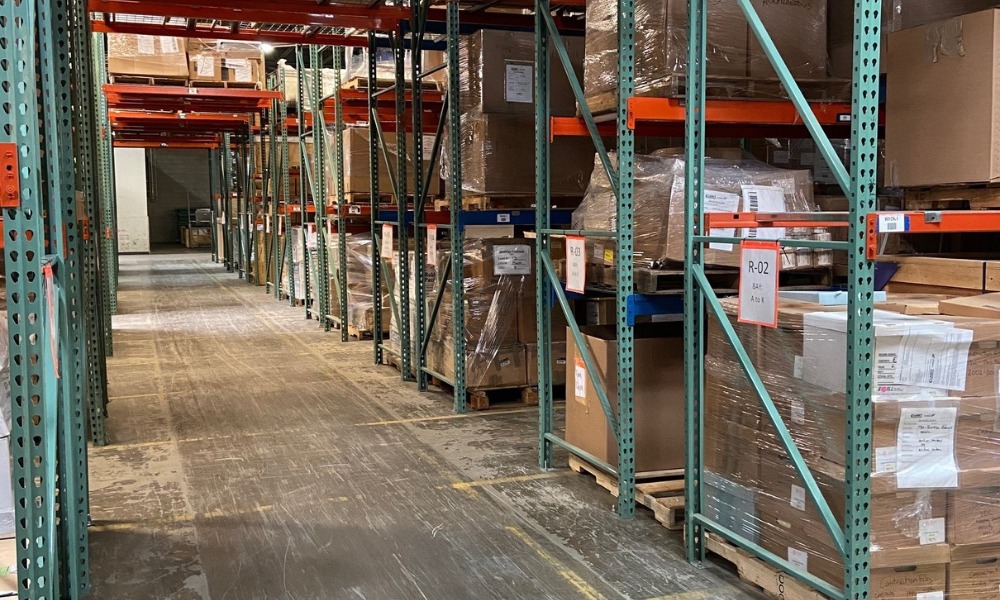
Seasonal inventory overflow happens when incoming volume exceeds a facility’s normal receiving, storage, or fulfillment capacity for a defined period. It is temporary by nature, tied to a holiday buildup, a promotional cycle, a harvest season, or a short-term contract.
The signal that overflow has become a real operational problem is simple: goods sit in trailers, hallways, or unplanned floor space because there is nowhere else to put them. That backup slows receiving, delays outbound orders, and increases the risk of damaged or misplaced product.
Businesses that experience this pattern every year, rather than once, are usually better served by a repeatable overflow plan than by reacting each time the surge hits.
Why Overflow Warehousing Matters for Buffalo Businesses
Buffalo’s manufacturing base, food-service supply chains, and growing e-commerce sector all generate demand spikes that do not match a fixed annual footprint. A warehousing strategy built around temporary capacity keeps operations running without locking a company into unused square footage for the rest of the year.
Several business types feel this pressure most directly:
- Retailers and promotional-product companies managing holiday, back-to-school, or event-driven order volume that concentrates into a few weeks.
- Food-service suppliers handling ingredient or packaging surges tied to seasonal menus or regional harvests.
- Manufacturers building ahead of a known production run or stockpiling components before a price or tariff change.
- E-commerce businesses absorbing order spikes from flash sales, holiday shopping, or new product launches.
Retail activity during peak periods illustrates the scale of these swings. Federal labor data highlights this trend, showing that employment in these industries increased by 492,000 during October, November, and December 2024, a slightly stronger holiday buildup than in 2023.
This seasonal labor surge mirrors the inventory buildup happening behind the scenes at the same time. Warehousing capacity has to move with that curve, not stay flat all year.
Common Overflow Scenarios and Planning Mistakes
Most overflow problems trace back to a handful of predictable triggers and a handful of avoidable mistakes.
Scenarios That Create Overflow
- A retailer receives holiday inventory six to eight weeks before the selling season starts, well before shelf or fulfillment space opens up.
- A food-service supplier stockpiles packaging or ingredients ahead of a short regional growing season.
- A promotional-product company takes on a large event order that requires staging and kitting space it does not normally carry.
- An e-commerce seller launches a new SKU line and receives a bulk container shipment before demand data confirms sell-through.
Planning Mistakes That Make Overflow Worse
- Waiting until the surge arrives to look for space, instead of forecasting volume 60 to 90 days ahead.
- Leasing permanent square footage to solve a problem that only lasts a few months.
- Skipping documented receiving procedures, which leads to inventory discrepancies once volume increases.
- Ignoring the wind-down plan, leaving businesses paying for capacity they no longer need after peak season ends.
READ MORE: 3PL Services in Buffalo, NY: Warehousing, Fulfillment, and Distribution Explained
Comparing Warehousing Models for Temporary Capacity

No single warehousing model fits every overflow situation. The right choice depends on volume, dwell time, and how quickly goods need to move from receiving to outbound delivery.
| Model | Best For | Typical Duration | Key Tradeoff |
|---|---|---|---|
| Dedicated Warehouse Space | High, predictable volume needing full control over layout and access | A full season or longer | Higher cost, but exclusive use and consistent handling |
| Shared Warehousing | Moderate volume, cost-conscious businesses that can share docks and staff | Weeks to a few months | Lower cost, but shared scheduling with other tenants |
| Cross-Docking | Fast-turn goods with little or no need for on-site storage | Days | Speeds up distribution, but requires tight inbound and outbound coordination |
| Short-Term Storage | Short surges or bridge periods between production and distribution | Days to a few weeks | Flexible timing, but generally sized for smaller volumes |
Businesses running a single, well-defined surge often lean toward shared warehousing or short-term storage. Companies with recurring, high-volume seasonal cycles, such as a manufacturer stockpiling ahead of a known production run, tend to benefit more from dedicated space or a structured cross-docking arrangement.
How to Build a Seasonal Overflow Warehousing Plan
A written plan keeps overflow warehousing predictable instead of reactive. The steps below apply whether the surge is driven by a holiday season, a harvest window, or a single large order.
Step 1: Forecast Peak Volume and Timing
Pull sales or production data from the last comparable season to estimate peak volume and the exact weeks it will hit. Businesses without prior-season data should use supplier lead times and order commitments to build a conservative estimate.
Step 2: Match the Warehousing Model to the Surge
Compare the volume and duration forecast against the four models above. A two-week bridge period calls for a different solution than a ten-week holiday buildup.
Step 3: Set Receiving and Inventory Controls
Confirm how inbound freight will be counted, inspected, and logged before it arrives. Facilities that verify pallet counts, SKU details, and condition at receiving avoid the inventory discrepancies that surface later during a busy season.
Step 4: Establish Replenishment Rules
Set reorder points and safety stock thresholds before peak volume hits. These rules prevent stockouts during the surge and reduce the amount of leftover inventory once demand tapers off.
Step 5: Plan the Wind-Down
Decide in advance how long the overflow arrangement runs and what happens to unsold or excess inventory afterward. A defined end date keeps temporary capacity from turning into an unplanned permanent cost.
What Affects Overflow Warehousing Costs and Timelines?
Overflow warehousing costs are not one-size-fits-all. Pricing depends on a combination of factors specific to each business and shipment, and it can range depending on how those factors line up. Several variables typically influence the estimate:
- Volume and pallet count, since space and labor scale with the amount of freight received.
- Dwell time, meaning how long goods sit before moving to outbound delivery.
- Handling complexity, including whether products need special packaging, labeling, or temperature-sensitive handling.
- Distance and destination, particularly for freight moving beyond Buffalo into other New York or Connecticut markets.
- Staffing and equipment needs, such as forklifts, dock scheduling, or extended receiving hours during peak weeks.
- Documentation requirements, including inventory reporting or client portal tracking.
Because every business’s overflow situation is different, a fixed price rarely reflects the real cost. Businesses evaluating this option should request a scoped estimate based on their actual volume, timeline, and handling needs.
When Should a Business Bring in a Professional Warehousing Partner?

A business should bring in a professional warehousing partner once overflow becomes a recurring pattern rather than a one-time event, or once internal space and staff can no longer keep pace with inbound volume.
Specific signals include:
- Inventory volume that consistently outgrows available space during the same weeks each year.
- Freight that needs to move across New York and Connecticut, which requires FMCSA registration and USDOT compliance on the transportation side.
- A need for real-time inventory visibility during high-volume weeks, rather than manual tracking.
- Multiple SKUs or suppliers that require organized receiving, cross-docking, or staged outbound delivery.
Businesses experiencing any of these signals typically get more value from an established warehousing and distribution provider than from ad hoc solutions like renting extra floor space or overloading existing staff.
Frequently Asked Questions
What happens if seasonal inventory volume in Buffalo changes from the original forecast?
A seasonal warehousing plan can sometimes be adjusted as actual inventory levels become clearer. Available overflow storage, labor, and distribution timing may vary depending on the size and timing of the change.
How can overflow inventory be separated by brand, department, or customer?
Inventory may be organized into designated areas or tracking groups based on the needs of the business. The setup can depend on product volume, handling requirements, and the warehouse’s inventory system.
What happens when damaged or rejected inventory is identified during a Buffalo overflow program?
Affected items may be separated from available stock and recorded for follow-up. The next step can depend on product condition, client instructions, and the inventory distribution plan.
What should Buffalo businesses consider when inventory requires lot, batch, or expiration tracking?
Some products may require additional tracking details beyond basic SKU or pallet counts. The appropriate process can depend on the product type, reporting needs, and how the inventory will be stored and distributed.
When might a Buffalo business need separated or restricted-access overflow storage?
Certain products or accounts may call for additional separation or access controls. Available options can vary based on the facility, inventory type, volume, and requirements of the seasonal warehousing program.
Planning Your Seasonal Warehousing Needs in Buffalo?
At Clancy Relocation & Logistics, we work with businesses throughout New York and Connecticut to provide warehousing, distribution, and transportation solutions that adjust to shifting inventory demands.
Our team can assist with receiving, storage, inventory handling, distribution, and seasonal freight coordination based on your volume, timing, and operational needs. We also offer options for short-term or overflow storage when extra space or flexibility is required.
Connect with us to review your upcoming inventory plans and seasonal schedule so we can help build a warehousing approach that works for your operation.