
What’s In This Guide
- What Does Winter Freight Planning in Buffalo Involve?
- Why Severe Weather Threatens Freight Transport Schedules in Buffalo
- What Are the Most Common Winter Freight Planning Mistakes?
- How to Build a Winter Freight Readiness Plan
- Winter Freight Readiness Checklist
- When Should Freight Be Delayed, Rerouted, or Temporarily Stored?
- Frequently Asked Questions
- Ready to Protect Your Buffalo Delivery Schedules This Winter?
Freight transport in Buffalo runs on a different calendar than the rest of the country. From November through March, lake-effect snow off Lake Erie can shut down a delivery lane in hours, and businesses that treat winter like any other season absorb the cost in missed appointments, idle docks, and frustrated customers.
The companies that keep freight moving through Western New York winters do not rely on luck. They build lead-time buffers, contingency routes, and clear communication triggers into their freight plans before the first storm forms over the lake.
Quick Facts
- Buffalo winter freight planning should include schedule buffers, alternate routes, and communication triggers.
- Lake-effect snow can disrupt corridors, making flexible routing and staging essential.
- Freeze-sensitive cargo may require climate-controlled equipment, handling, and secure warehouse options.
- Businesses should define criteria for delaying, rerouting, or temporarily storing freight shipping loads.
- Early carrier coordination and documented notifications can reduce disruption during severe weather.
What Does Winter Freight Planning in Buffalo Involve?

Winter freight planning is the process of adjusting lead times, routes, equipment, staging locations, and communication protocols so freight keeps moving when severe weather disrupts normal operations. In Buffalo, that means planning specifically for lake-effect snow, sudden road closures, driving bans, and temperature exposure between roughly November and March.
A complete plan covers five areas: schedule buffers, weather contingency routing, trailer and cargo preparation, carrier capacity and emergency warehousing, and customer notification protocols. Each area answers one question in advance: what happens to this load if the weather turns while the freight is already committed?
Why Severe Weather Threatens Freight Transport Schedules in Buffalo
Buffalo’s winter risk profile is driven by lake-effect snow, which forms when cold winds crossing Lake Erie pick up moisture and release it as intense, narrow bands of snowfall downwind. These bands can bury one corridor under several inches per hour while a route ten miles away stays passable. That localization is exactly why single-route freight plans fail in Western New York.
The operational impact is measurable. Federal Highway Administration data shows freeway speeds drop 5 to 40 percent in heavy snow, while snow accumulation blocks lanes and reduces roadway capacity outright. Across metropolitan areas, truckers lose about $3.4 billion in weather-related traffic delays each year, and snow-belt markets like Buffalo carry a disproportionate share of that exposure.
There is also a regulatory layer that many freight schedules ignore. Under federal law, commercial drivers must reduce speed or discontinue operation entirely when snow, ice, or poor visibility make conditions hazardous. A driver who parks a trailer during a whiteout is following 49 CFR 392.14, not missing a deadline. Winter freight plans that treat safety holds as schedule failures set every party up for conflict. Plans that anticipate holds keep the customer relationship intact.
What Are the Most Common Winter Freight Planning Mistakes?
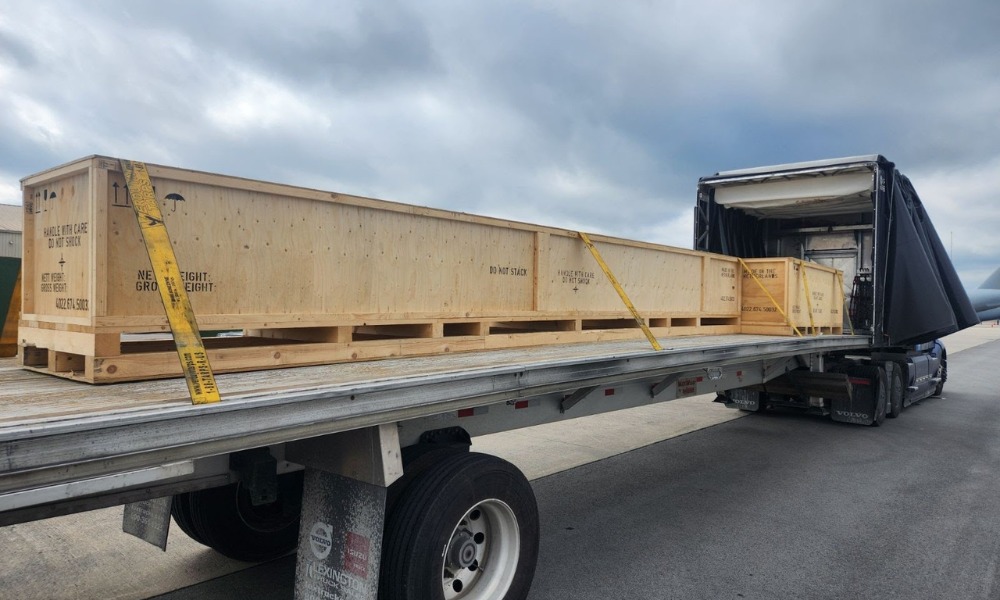
Most winter freight disruptions trace back to planning gaps, not the storm itself. The weather is predictable in its unpredictability. The mistakes below are what turn a snow event into a supply chain failure.
- Booking zero-buffer transit times. Quoting summer transit windows in January leaves no room for reduced speeds, chain-up delays, or safety holds.
- Relying on one corridor. When a lake-effect band sits over the I-90 corridor, freight without a pre-approved alternate route sits with it.
- Ignoring temperature exposure. Freight that tolerates a two-hour winter transit may not tolerate an overnight hold in an unheated trailer during a storm delay.
- Waiting for the storm to communicate. Receivers, dock teams, and customers who learn about a delay after the appointment window closes lose confidence quickly.
- Assuming carrier capacity will be available. Regional capacity tightens fast during multi-day snow events, and businesses without established carrier relationships end up at the back of the line.
- Having no staging option. Without access to emergency warehousing, the only choices during a closure are risky transit or freight stranded in a trailer yard.
How to Build a Winter Freight Readiness Plan
A winter freight readiness plan works best when each element is decided before the season starts, then activated by defined weather triggers. The steps below cover the full sequence.
Step 1: Set Lead-Time Buffers Before the Season Starts
Add 24 to 72 hours of schedule flexibility to weather-exposed lanes, scaled to the freight’s urgency and the route’s snow-belt exposure. Time-critical freight should move earlier in the week during winter months so a one-day hold does not push delivery into a weekend or a receiver’s blackout period. Build these buffers into customer commitments now, not into apology emails later.
Step 2: Map Alternate Routes and Weather Contingency Routing
Identify a primary route and at least one alternate for every recurring lane, and document which corridors are most exposed to lake-effect bands. Weather contingency routing also means knowing where a driver can safely stage if a closure hits mid-route: approved truck stops, partner yards, or a warehouse dock. Controlled routing decisions made in advance beat improvised detours made in a whiteout.
Step 3: Prepare Trailers and Cargo for Cold Exposure
Confirm which loads are freeze-sensitive, including liquids, adhesives, electronics, and certain packaged goods, and assign those loads to climate-controlled or temperature-controlled trailers. Verify fuel treatments, air line antifreeze, tire condition, and functioning trailer heat before dispatch. Inside the trailer, block and brace cargo for harder braking and rougher pavement, and keep sensitive freight off the floor and away from door drafts.
Step 4: Define Communication Triggers and Notification Protocols
Tie specific actions to specific National Weather Service alert levels. A winter storm watch on a planned route should trigger a proactive check-in with the receiver. A warning or driving ban should trigger appointment rescheduling and a customer notification before the delivery window opens. Assign one owner for these notifications so shippers, carriers, and receivers hear one consistent message instead of three conflicting ones.
Step 5: Line Up Carrier Capacity and Emergency Warehousing
Confirm winter capacity commitments with carriers before demand spikes, including access to both truckload and LTL options for splitting or consolidating loads around weather windows. Arrange access to climate-controlled warehouse space near the destination market so freight can be received, staged, and protected during multi-day closures.
Winter Freight Readiness Checklist

- Lead-time buffers added to all winter lane commitments
- Primary and alternate routes documented per lane
- Freeze-sensitive SKUs identified and matched to climate-controlled equipment
- Trailer winterization completed and verified before dispatch
- NWS alert thresholds mapped to specific rescheduling actions
- Carrier capacity confirmed for the full winter season
- Emergency warehouse staging location secured near key delivery markets
- Customer notification templates drafted and ownership assigned
When Should Freight Be Delayed, Rerouted, or Temporarily Stored?
The right call depends on three factors: road status, freight sensitivity, and delivery flexibility. Work through the questions below in order when a storm threatens an active or pending load.
1. Is a driving ban, closure, or blizzard warning active on the planned route?
If yes, transit stops. Move to question 3 to decide between holding at origin and staging in a warehouse. If no, continue.
2. Is a viable alternate route open with acceptable added transit time?
If yes, reroute and notify the receiver of the revised ETA. If the alternate adds more time than the delivery window allows, treat the load as delayed and continue.
3. Can the freight safely wait where it is?
Durable, non-sensitive freight with a flexible receiver can hold at origin or at a secure staging point until roads reopen. Delay is the simplest and often the best option.
4. Is the freight temperature-sensitive, high-value, or facing a multi-day disruption?
If yes, move the load into climate-controlled warehouse storage rather than leaving it in a trailer. Warehouse staging protects the cargo, frees the trailer and driver, and positions the freight for fast final delivery once conditions clear.
The pattern is straightforward: reroute when a safe path exists, delay when the freight can tolerate waiting, and store when the disruption is long or the cargo cannot sit in a trailer.
➤ IN CASE YOU MISSED IT: Why Buffalo Is a Strategic Freight Hub for Northeast and Cross-Border Shipping
Frequently Asked Questions
Can winter freight planning cover both inbound and outbound Buffalo shipments?
Yes. Winter freight planning may account for shipments moving into or out of Buffalo, depending on routes, timing, and service needs. The approach can vary by shipment and seasonal conditions.
Can Buffalo freight shipping be coordinated across multiple delivery locations?
Potentially. Multi-location deliveries can be coordinated depending on the number of stops, access needs, timing, and winter conditions. Available options may vary by route and shipment requirements.
What should businesses do if severe weather develops after normal operating hours?
Businesses may benefit from having a designated contact and a general process for schedule changes outside normal hours. The specific approach can depend on carrier arrangements, weather contingency routing, and operating needs.
Can recurring vendor shipments be included in a Buffalo winter freight plan?
Yes. Recurring vendor shipments can be considered as part of a Buffalo winter freight plan. Timing and coordination may vary based on expected volume, carrier availability, and changing conditions.
Can freight be released from storage in stages after a Buffalo winter storm?
In some cases, stored freight may be released in stages depending on warehouse availability, receiving schedules, and road conditions. Timing can vary as normal freight shipping operations resume.
Ready to Protect Your Buffalo Delivery Schedules This Winter?
At Clancy Relocation & Logistics, we provide commercial freight, warehousing, and logistics support for businesses across New York and surrounding areas. Our services can help manage changing schedules, storage needs, and delivery coordination when winter weather affects normal operations.
Talk with us about building a winter freight plan around your routes, cargo, and delivery needs.