
Table of Contents
- The Short Answer: Warehouse Location Is a Network Decision
- Why Warehouse Location Strategy Matters for NYC Businesses
- Manhattan vs. Outer Boroughs vs. Regional Warehouses: A Side-by-Side Comparison
- Common Inventory Positioning Mistakes That Cost NYC Businesses Money
- How to Evaluate Warehouse Location: A Step-by-Step Framework
- Delivery Windows, Truck Access, and Compliance Factors That Shape Final-Mile Distribution
- When to Bring In a Logistics and Warehousing Partner
- Frequently Asked Questions
- Ready to Build a Smarter Warehouse Location Strategy?
Picking a warehouse because it sits closest to your office is a common mistake among growing NYC businesses. A logistics and warehousing company evaluates staging locations the same way a network engineer evaluates data centers: by measuring flow, not proximity. The right answer depends on customer concentration, replenishment cycles, truck-route access, and how fast stock actually turns.
Key Takeaways
- Manhattan staging can shorten final-mile delivery time for time-sensitive Manhattan orders, but it often comes with tighter dock access and fewer lower-cost space options than less-dense regional locations.
- Outer-borough facilities in Brooklyn, Queens, the Bronx, and Staten Island can balance access to NYC truck routes with proximity to multiple boroughs, providing a middle-ground option between Manhattan staging and regional warehousing.
- Regional warehouses outside the five boroughs, including sites across New York and Connecticut, typically offer larger footprints and easier trailer access, at the cost of a longer final leg into Manhattan.
- All trucks with two axles and six tires, or three or more axles, must follow the New York City Truck Route Network, which directly affects how fast inventory can move from a warehouse to a delivery address.
- Stock velocity should drive the decision: fast-turning SKUs benefit from proximity to customers, while slow-moving or bulk inventory is usually better suited to lower-density regional storage.
The Short Answer: Warehouse Location Is a Network Decision
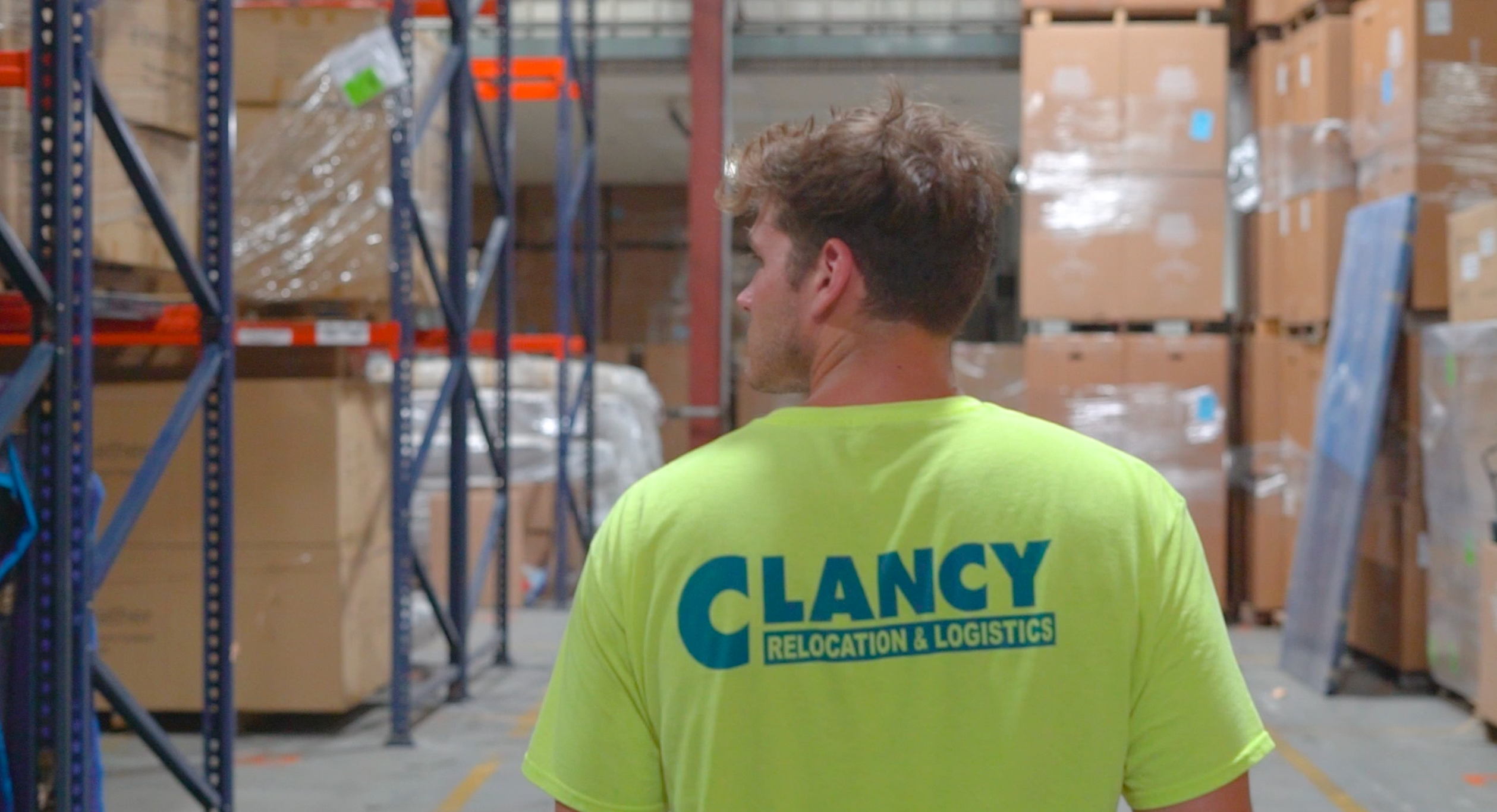
Warehouse selection should be treated as a distribution network design problem. The right location balances four variables: how concentrated your customers are, how often you need to replenish stock, how easily trucks can reach the facility and your delivery zone, and how fast individual SKUs turn over.
A business shipping high-velocity, same-day orders to Manhattan clients needs a different setup than a business replenishing retail locations across the tri-state area on a weekly cycle. Matching the warehouse to the delivery pattern, rather than the other way around, is what separates an efficient logistics network from an unnecessarily costly one.
Why Warehouse Location Strategy Matters for NYC Businesses
Warehouse location strategy directly affects delivery costs, delivery speed, and how much inventory a business needs to hold at any given time. A facility placed too far from customers can create longer final-mile distribution routes, higher fuel and labor costs per delivery, and larger safety-stock buffers to account for transit variability.
A facility placed close to customers but without enough space or dock capacity can create a different problem: congestion, limited storage for slower-moving inventory, and higher occupancy costs per unit stored. Treating location as a network decision rather than only a real estate decision helps businesses evaluate delivery windows, storage capacity, and transportation tradeoffs together.
Freight volume makes this planning especially important in NYC. According to the NYC Department of Transportation, close to 90 percent of the city’s goods are moved into and around New York City by truck. That reliance on trucks puts pressure on distribution planning, from route selection and dock scheduling to curb access, making warehouse location an important part of a reliable staging strategy.
Manhattan vs. Outer Boroughs vs. Regional Warehouses: A Side-by-Side Comparison
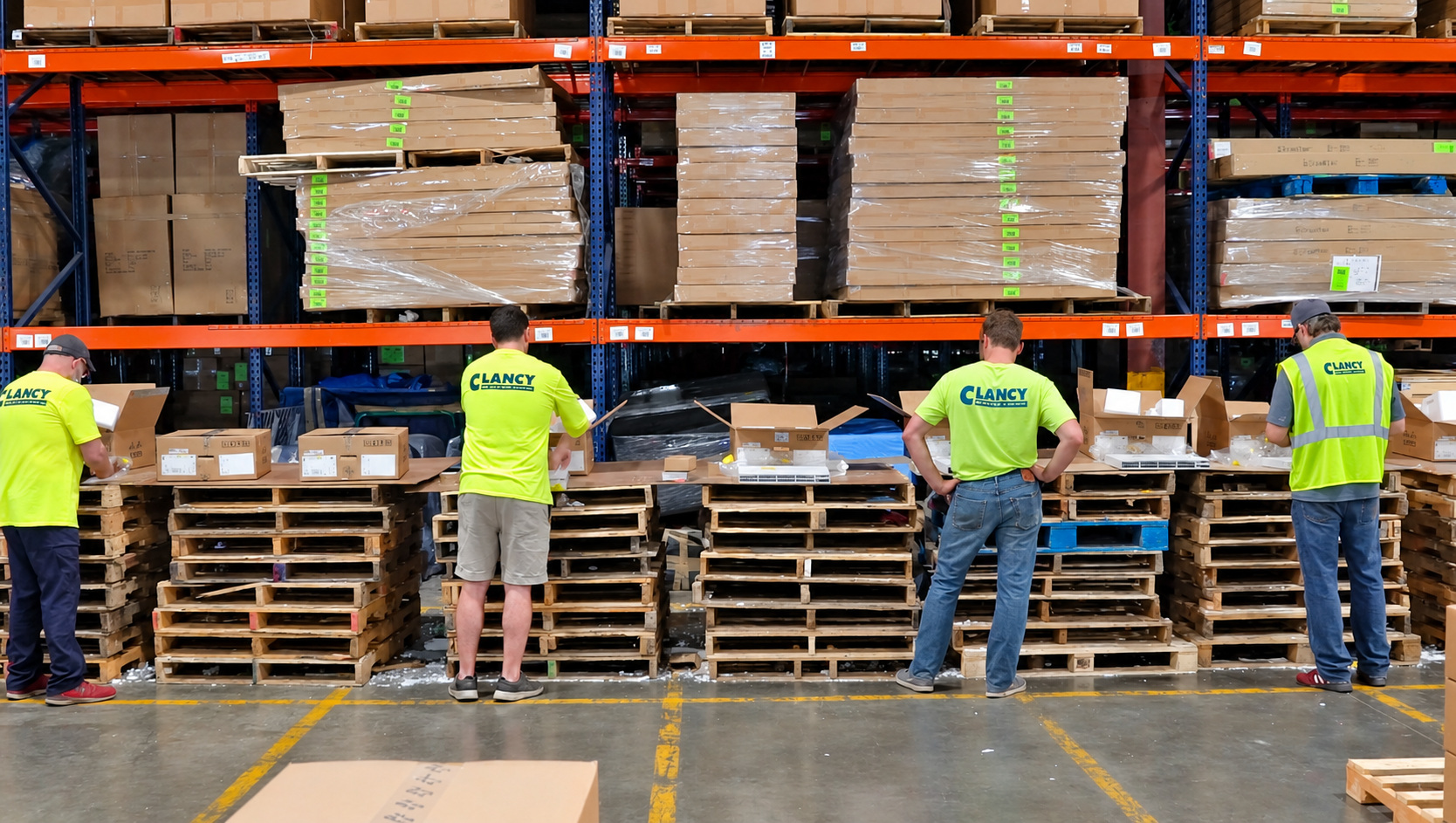
Each option serves a different kind of business need. The table below compares the three staging locations across the factors that actually affect delivery performance.
|
Factor |
Manhattan |
Outer Boroughs |
Regional (NY/CT) |
|
Final-mile delivery speed |
Potentially shortest final leg for Manhattan-focused deliveries |
Varies by borough and customer concentration |
Longer final leg into NYC, but broader regional reach |
|
Truck route and dock access |
Generally more constrained by dense urban streets, loading zones, and building rules |
Varies by borough, industrial corridor, and facility |
Often fewer urban access constraints, depending on location |
|
Typical facility size |
Often smaller urban footprints |
Varies widely by borough and submarket |
Larger footprints are more common outside the five boroughs |
|
Best fit for |
Same-day or other time-sensitive orders, high-velocity SKUs |
Borough-wide fulfillment, moderate replenishment cycles |
Bulk storage, slower-turning inventory, regional distribution |
|
Replenishment frequency supported |
High frequency, small batch |
Moderate frequency |
Lower frequency, larger batch sizes |
No single location wins across every category. A business with customers concentrated in Manhattan and the surrounding boroughs will weigh delivery speed heavily, while a business distributing to retail or wholesale accounts across the Northeast will weigh footprint and dock access more heavily.
Common Inventory Positioning Mistakes That Cost NYC Businesses Money
Facilities and operations teams tend to repeat the same few errors when choosing where to stage inventory. Each one is avoidable with a bit of upfront planning.
- Choosing based on rent alone. A lower square-footage rate in a location with poor truck-route access often costs more once delivery delays, missed windows, and extra freight runs are factored in.
- Ignoring replenishment frequency. A warehouse that works well for weekly restocking can create serious bottlenecks for a business that needs to replenish daily.
- Treating all SKUs the same. Fast-moving and slow-moving inventory should not automatically follow the same positioning strategy. High-velocity SKUs may justify closer access to customers, while slower-moving stock can often tolerate a longer final leg when storage cost matters.
- Overlooking building or dock access rules. Loading dock hours, elevator reservations, and building-specific delivery windows can add significant time to individual deliveries.
- Underestimating delivery window overlap. Businesses serving customers with strict delivery appointments need a warehouse location that reliably supports those windows, not just one that is geographically close.
How to Evaluate Warehouse Location: A Step-by-Step Framework
Warehouse location decisions get easier when broken into a repeatable process. The following framework works for a single-location decision or a full network redesign.
Step 1: Map Customer Concentration
Plot delivery addresses by density, not just by borough. A cluster of customers in Lower Manhattan and one in Long Island City behave very differently, even though both are technically “NYC.”
Step 2: Calculate Replenishment Frequency by SKU Category
Group inventory by how often it needs restocking. High-frequency SKUs favor a location closer to customers, while low-frequency, bulk-order SKUs can tolerate a longer final leg from a regional warehouse.
Step 3: Match Truck-Route Access to Delivery Windows
Cross-reference the facility’s access to the city’s designated truck-route network, including any applicable Local, Through, and Limited Local Truck Routes, against the delivery windows your customers require. A warehouse with excellent highway access but poor connectivity to the appropriate local truck routes can still create delays on the final leg.
Step 4: Score Stock Velocity Against Storage Cost
Rank inventory by turnover rate, then compare that ranking against the storage cost per square foot at each candidate location. Fast-turning stock generally justifies higher-cost, closer-in space. Slow-turning stock rarely does.
Step 5: Weigh Cost Against Risk
Factor in the operational risk of each option: congestion delays in dense areas, longer transit exposure from regional sites, and the cost of holding extra safety stock to offset transit variability. The lowest-cost option on paper is not always the lowest-risk option in practice.
READ MORE: Retail Fixture Rollouts in NYC: How Logistics Companies Coordinate Storage, Delivery, and Installation
Delivery Windows, Truck Access, and Compliance Factors That Shape Final-Mile Distribution
Delivery windows are only as reliable as the truck-route access that supports them. NYC’s Truck Route Network includes Local, Through, and Limited Local designations, with route use determined by a truck’s origin, destination, and vehicle type. Limited Local Truck Routes apply to certain Staten Island roadways and are restricted to trucks with two axles and six tires. NYC DOT adopted citywide truck-route changes with an effective date of October 4, 2026, so staging plans should use the updated rules and posted restrictions when evaluating final-mile distribution. A warehouse’s access to the appropriate truck routes can affect how consistently a business meets tight delivery appointments.
Businesses shipping cargo across state lines should verify that the carrier has the FMCSA registration and operating authority required for its specific operation. FMCSA requires a USDOT number for certain interstate commercial motor vehicle operations, and many for-hire interstate carriers also need operating authority. Staging plans serving the New York-New Jersey region should also account for freight volumes around the Port of New York and New Jersey, which the Port Authority identifies as the nation’s second-busiest seaport.
When to Bring In a Logistics and Warehousing Partner
Businesses evaluating multiple staging locations, coordinating across several delivery zones, or scaling replenishment frequency often reach a point where in-house planning is not enough. That point usually shows up as missed delivery windows, inconsistent stock levels across locations, or growing freight costs with no clear explanation.
Logistics companies in NYC that operate facilities across multiple markets can model these tradeoffs directly, using real dock capacity, real truck-route access, and real replenishment data instead of estimates. That kind of network-level view is difficult to build from a single warehouse’s perspective.
Frequently Asked Questions
Do businesses need one warehouse or multiple locations across NYC and the region?
It depends on customer concentration, order volume, and replenishment frequency. A single facility may work for a concentrated delivery area, while businesses serving both NYC and broader regional markets may benefit from separating fast-moving inventory from bulk or reserve stock across multiple locations.
Is a Manhattan warehouse always faster for Manhattan deliveries?
Not necessarily. Geographic proximity helps, but dock availability, truck-route access, congestion, loading restrictions, and delivery windows can all affect actual transit time. An outer-borough facility with better access may perform more consistently for some delivery patterns.
When does an outer-borough warehouse make more sense than Manhattan?
Outer-borough facilities can make sense when a business needs more space, stronger truck access, or coverage across multiple boroughs without moving inventory too far from the city. They often serve as a middle ground between dense Manhattan staging and regional storage.
Can a regional warehouse still support same-day NYC deliveries?
Potentially, but feasibility depends on distance, cutoff times, traffic conditions, carrier capacity, and where customers are concentrated. Businesses should model actual travel times and delivery windows rather than assume that a regional facility can consistently support same-day service.
How often should a business review its warehouse location strategy?
A review is useful when order volume, customer geography, SKU velocity, delivery requirements, or transportation costs change materially. Rapid growth, new markets, or repeated delivery delays can all signal that the current staging model no longer fits the business.
Ready to Build a Smarter Warehouse Location Strategy?
Clancy Relocation & Logistics operates warehousing and distribution facilities across New York and Connecticut, giving businesses a practical way to compare staging options without guessing at truck-route access or dock capacity.
Contact our team today to evaluate your distribution network, optimize inventory placement, and streamline your NYC logistics strategy.
Related Posts:
- Best Enterprise IT and Data Center Relocation Companies: How to Build the Right Team
- Lab Moving Companies in Connecticut: Who Can Relocate a Full Lab?