
What’s In This Guide
- What Does Port-to-Manhattan Freight Coordination Actually Involve?
- Why This Three-Leg Move Matters for NYC Businesses and Facilities Teams
- Common Planning Mistakes That Delay Port-to-Manhattan Freight
- Step-by-Step: How Freight Moves From the Port to a Manhattan Building
- Timing and Coordination Factors That Affect Cost and Delivery Windows
- When Schedules Break Down
- When to Bring In a Professional Freight and Warehousing Team
- Frequently Asked Questions
- Ready to Coordinate Your Next Port-to-Manhattan Freight Move?
Moving containerized freight from the Port of New York and New Jersey into a Manhattan commercial building requires precise timing across multiple stages. Between strict terminal free time windows, NYC truck routing rules, and tight building delivery appointments, coordinating drayage, temporary warehouse staging, and final-mile transport is essential for keeping shipments on schedule and avoiding costly fees.
Quick Facts
- Free time varies by cargo and tariff. Under the New York Terminal Conference tariff, general import containers receive four free days, while refrigerated containers and certain special equipment receive two, with Saturdays, Sundays, and ILA holidays excluded except when the terminal gate is open. Service contracts or carrier tariffs may provide different terms, and demurrage may begin after the applicable free time expires.
- NYC’s truck network is split in two. Local Truck Routes and Through Truck Routes govern where final-mile freight vehicles that meet NYC’s definition of a truck can travel. Trucks with 53-foot trailers are generally limited to specified portions of I-95, I-695, I-295, and I-495 that cross the city.
- Invoicing has a federal clock. Under Federal Maritime Commission rules, vessel-operating common carriers and marine terminal operators must issue demurrage or detention invoices within 30 calendar days after charges were last incurred. Non-vessel-operating common carriers have 30 calendar days from the date of the invoice they receive.
- Port volume remained high in the first half of 2026. The Port of New York and New Jersey moved 4,427,159 TEUs during the first six months of the year, virtually even with the same period in 2025.
- Warehouse staging can provide a buffer between the port and the final Manhattan address when vessel delays, building access conflicts, or appointment changes occur. However, staging does not automatically stop detention or per diem charges; those charges depend on how long carrier equipment remains in use and when it is returned under the applicable tariff.
What Does Port-to-Manhattan Freight Coordination Actually Involve?
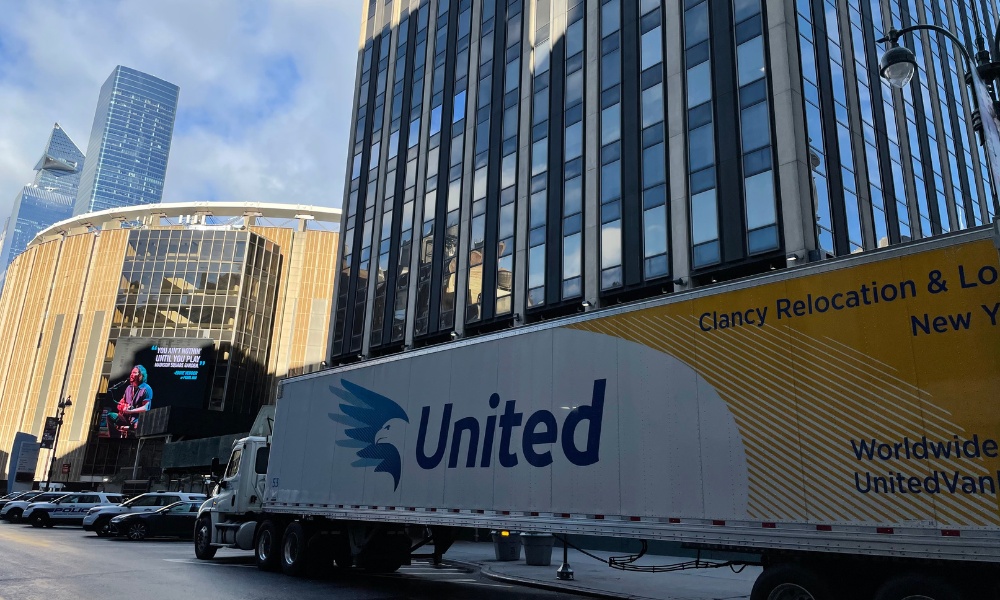
Port-to-Manhattan freight logistics is the process of moving a container from a marine terminal through drayage transport, temporary warehouse staging, and a scheduled final-mile delivery into a Manhattan building. Each leg runs on its own clock, and missing one affects the others.
Port Drayage
The short truck move that pulls a container off the terminal and out of the port, typically to a nearby warehouse rather than straight to the final address.
Warehouse Staging
A temporary hold point where cargo is unloaded, sorted, and prepared for final transport on a schedule that matches the receiving building’s access rules.
Final Delivery
The last leg into Manhattan, where truck route restrictions, loading dock reservations, and freight elevator windows all have to line up before a driver can complete drop-off.
Treating this as three disconnected legs, rather than one coordinated process with linked deadlines, increases the risk of demurrage fees, detention charges, or a missed building appointment.
Why This Three-Leg Move Matters for NYC Businesses and Facilities Teams
Every day a container sits past its free time adds direct cost, and every missed building appointment can create a rescheduling delay that lasts for days in a dense market like Manhattan. Understanding the handoffs ahead of time is what keeps both risks off the table.
The Port of New York and New Jersey handled 4,427,159 TEUs in the first half of 2026, virtually even with the same period in 2025. June volume reached 769,422 TEUs, up 11.9% from June 2025, which the Port Authority described as an indication of an earlier, front-loaded peak shipping season. Coordinating terminal pickup, drayage, and delivery timing in advance becomes especially important during these peak periods.
On the delivery end, Manhattan adds its own layer of friction. Loading docks, freight elevators, and curb space are shared resources with limited windows, and a building’s security or property management office typically requires advance notice before a truck arrives. A shipment that reaches the city without a confirmed appointment often has nowhere to go but a staging facility, which is exactly why that middle leg matters.
Common Planning Mistakes That Delay Port-to-Manhattan Freight

Avoidable planning gaps can delay port-to-Manhattan freight even when external conditions are favorable.
Treating Free Time as Flexible
Free time is set by the applicable terminal and carrier tariff or service contract. After terminal free time expires, demurrage may accrue while cargo remains at the terminal. After equipment leaves the terminal, detention or per diem may apply if that equipment is kept beyond the carrier’s allowed time. Rates and escalation schedules vary. The FMC distinguishes demurrage at the terminal from detention for extended equipment use.
Skipping Staging and Attempting a Direct Delivery
Without warehouse staging, a delay at the building can leave the driver and equipment waiting or force the delivery to be rescheduled. If cargo is transloaded at a warehouse, carrier equipment should still be returned within the applicable free-time period to limit detention or per diem exposure.
Ignoring NYC’s Truck Route Network
Trucks with two axles and six tires, or three or more axles must follow NYC DOT’s Local and Through Truck Route Network. Non-designated roads may be used at the beginning or end of a trip when traveling between the truck route and the origin or destination.
Incomplete Consignee Documentation
Accurate consignee documentation remains important for delivery coordination and invoice review. The Federal Maritime Commission’s demurrage and detention billing rule establishes invoicing deadlines and required invoice information, but the provision that restricted which parties could be billed was set aside by the U.S. Court of Appeals for the D.C. Circuit in September 2025. Missing or inaccurate shipment information can still complicate billing review and disputes.
No Confirmed Building Appointment Before Dispatch
Sending a truck toward Manhattan without a confirmed freight elevator or loading dock window can result in same-day rescheduling.
READ MORE: How Freight Logistics Works in NYC for Manhattan
Step-by-Step: How Freight Moves From the Port to a Manhattan Building
Step 1: Container Discharge and Drayage Pickup
Once a vessel is discharged at a marine terminal in the Port of New York and New Jersey, the container enters the applicable terminal free-time period. Under the New York Terminal Conference tariff, general import containers receive four free days, while some refrigerated and special equipment receive two; service contracts and carrier terms can alter the period. A drayage carrier pulls the container from the terminal and transports it a short distance, typically to a regional warehouse rather than directly into the city.
Step 2: Warehouse Staging and Appointment Scheduling
At the staging warehouse, the container is unloaded, and freight is sorted, inspected, and prepared for its final leg. This is also where a delivery appointment gets locked in with the receiving building, factoring in the property’s freight elevator hours, loading dock availability, and any advance-notice requirements from building management.
Step 3: NYC Truck Route Compliance for the Final Leg
Before dispatch, the route into Manhattan should account for truck dimensions and New York City’s Local and Through Truck Route Network. NYC DOT limits single-unit vehicles, including box trucks, to 35 feet in length. Trucks with 53-foot trailers may travel only on specified portions of I-95, I-695, I-295, and I-495 that cross the city, subject to applicable permit rules.
Step 4: Building Access, Delivery, and Documentation
On delivery day, the driver checks in with building security or a loading dock coordinator, confirms the reserved freight elevator or dock window, and completes the drop-off. Accurate delivery documentation, including who the consignee is and when the delivery was completed, matters here too, since that same information feeds into any billing or dispute process if equipment charges are involved.
Timing and Coordination Factors That Affect Cost and Delivery Windows
|
Stage |
Typical Timing Constraint |
Risk If Missed |
|
Port free time |
Varies by cargo and tariff; NYTC general import containers receive four free days |
Demurrage may begin after the applicable free time expires |
|
Equipment hold (drayage carrier) |
Set by the ocean carrier’s tariff |
Detention or per diem charges |
|
Building freight elevator or dock window |
Reserved in advance with property management |
Delivery rescheduled, added staging time |
|
Demurrage/detention billing |
VOCCs and MTOs: invoice within 30 calendar days after charges were last incurred; NVOCCs: invoice within 30 calendar days of the invoice they received |
Potential billing or compliance issues if deadlines are missed |
When Schedules Break Down

Even a well-planned move can hit a snag. A vessel delay, a building maintenance closure, or a last-minute change in dock availability can all knock a shipment off schedule. If the freight has already been unloaded at the staging warehouse, it can remain there until a new delivery window is confirmed, or it can move the same day if the building can accommodate a revised slot.
Holding cargo at a staging facility can reduce delivery-day risk after the carrier’s equipment has been returned. If the carrier’s equipment remains in use beyond the permitted free time, detention or per diem charges may continue even while the freight is at the warehouse.
When to Bring In a Professional Freight and Warehousing Team
Businesses that move freight into Manhattan only occasionally can sometimes manage a single shipment in-house with enough lead time.
Recurring freight, oversized equipment, or shipments tied to a hard deadline can require tighter coordination, and an experienced logistics partner with in-market warehousing, a dedicated move coordinator, and familiarity with building access rules can help manage those requirements.
Coordinating drayage timing, staging capacity, and a confirmed building appointment through a single point of contact can reduce handoff risk across the move.
Frequently Asked Questions
What is the difference between demurrage and detention?
Demurrage generally applies when a container remains at the marine terminal beyond its allowed free time. Detention applies after the equipment leaves the terminal and is kept beyond the carrier’s permitted period before return.
Do companies moving freight across state lines need special registration?
Interstate motor carriers generally need appropriate federal operating credentials, which may include a USDOT number and operating authority depending on the type of freight services being provided. Businesses should verify a carrier’s credentials before hiring it for interstate freight service.
Should a Manhattan delivery appointment be confirmed before the container leaves the staging warehouse?
Yes. Confirming the loading dock, freight elevator, and receiving window before dispatch reduces the risk of a truck arriving when the building cannot accept the shipment.
What information should a receiving building get before a freight delivery?
Property management may need the delivery date and time, carrier information, truck details, coverage or vendor documentation, and confirmation of loading dock or freight elevator use. Requirements vary by building, so they should be confirmed in advance.
Can freight be split into smaller deliveries after warehouse staging?
Yes. Staging can allow a container to be unloaded and the cargo reorganized into smaller delivery loads when the receiving building cannot accommodate the original shipment size or vehicle configuration.
Ready to Coordinate Your Next Port-to-Manhattan Freight Move?
Clancy Relocation & Logistics has supported businesses across New York and Connecticut since 1921, combining warehousing capacity with hands-on experience navigating Manhattan’s building access and truck routing requirements.
Reach out to plan a port-to-building freight move with staging and delivery timing built in from the start.
Related Posts