
What’s In This Guide
- What Changed in the 2025 to 2026 NMFC Overhaul
- Why This Matters for Buffalo Freight Operations
- Common Classification Mistakes That Trigger Reweighs
- How to Recheck LTL Freight Class Before Booking
- Coordination and Documentation Factors for LTL Bookings
- When to Bring in a Freight Brokerage Partner
- Frequently Asked Questions
- Need Help Confirming Your Freight Classification Before You Book?
If a bill of lading still references an NMFC item number from before July 2025, the next LTL invoice may not match the quote that was booked. The NMFC freight classification system did not move entirely away from commodity-based provisions, but Docket 2025-1 moved more than 2,000 NMFC items to full-scale density-based classification and consolidated many commodity listings. Buffalo businesses shipping packaged or palletized freight should therefore recheck older NMFC item numbers and class assumptions against the current classification.
For any operation that relies on freight logistics to move product through the Peace Bridge corridor or across the Northeast, rechecking freight class before booking can reduce the risk of reclassification and billing discrepancies. Freight brokerage services that use current NMFC data can help identify potential classification mismatches before pickup, but shippers still need to understand what changed and why.
Quick Facts
- Density became the primary classification factor for many affected items. NMFC Docket 2025-1 took effect July 19, 2025, moving more than 2,000 NMFC items to full-scale density-based classification where handling, stowability, or liability characteristics do not require item-specific treatment.
- The density scale expanded from 11 tiers to 13. Classes 55 and 50 were added for the 35 to under 50 PCF and 50 PCF or greater brackets, respectively, allowing sufficiently dense freight under the full-scale density model to fall into lower freight classes. Actual transportation rates still depend on the carrier’s applicable pricing, tariffs, or contracts.
- Density is measured in pounds per cubic foot (PCF). Divide total shipment weight by the shipment’s cubic feet. To calculate cubic feet from dimensions in inches, multiply length by width by height, then divide by 1,728.
- NMFC updates did not stop at one docket. Docket 2025-2 took effect December 6, 2025, and Docket 2026-1 followed on May 23, 2026, each revising additional commodity groups.
- Buffalo carries meaningful cross-border freight volume. The Bureau of Transportation Statistics reported 892,838 incoming trucks from Canada at Buffalo, NY, in 2023, representing 16.2 percent of total Northern border truck traffic that year.
What Changed in the 2025 to 2026 NMFC Overhaul
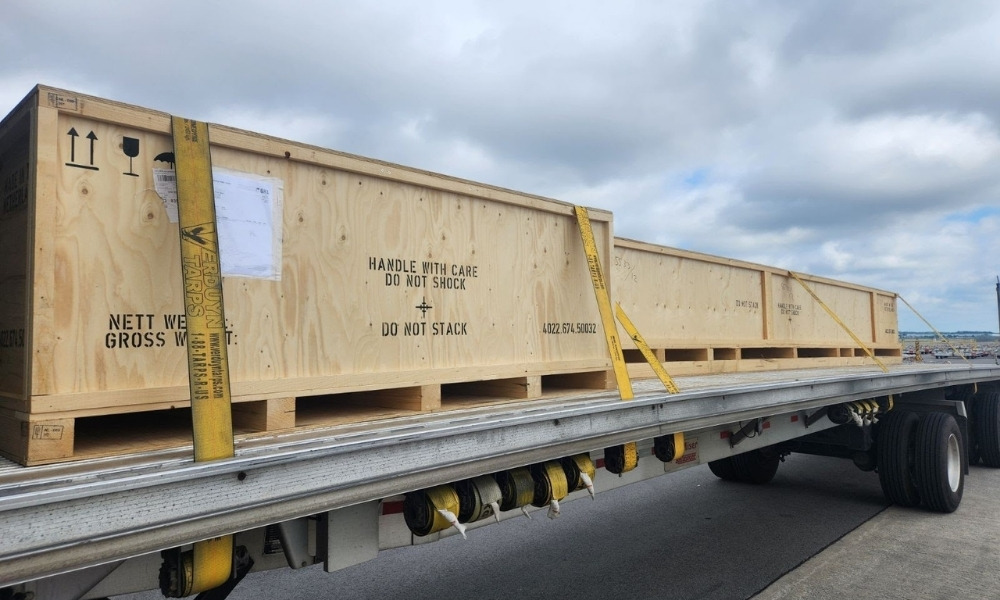
NMFC Docket 2025-1 moved more than 2,000 items to full-scale density-based classification while retaining item-specific treatment where handling, stowability, or liability characteristics warrant it. Effective July 19, 2025, the docket expanded the standard density scale from 11 to 13 tiers and consolidated many commodity listings. NMFTA described the update as one of the most significant revisions to the NMFC in its nearly 90-year history.
The Updated 13-Tier Density Scale
|
Density (PCF) |
Freight Class |
|
Under 1 |
400 |
|
1 to under 2 |
300 |
|
2 to under 4 |
250 |
|
4 to under 6 |
175 |
|
6 to under 8 |
125 |
|
8 to under 10 |
100 |
|
10 to under 12 |
92.5 |
|
12 to under 15 |
85 |
|
15 to under 22.5 |
70 |
|
22.5 to under 30 |
65 |
|
30 to under 35 |
60 |
|
35 to under 50 |
55 |
|
50 and over |
50 |
Two follow-up dockets kept the density model moving forward. NMFTA’s classification updates continued after the major 2025 NMFC changes. Docket 2025-2 took effect December 6, 2025, followed by Docket 2026-1 on May 23, 2026. The later docket addressed additional commodity groups, including personal care products and business or office machines.
A Buffalo LTL account using NMFC item numbers carried forward from before mid-2025 should verify those items against the current NMFC and determine whether Docket 2025-1, 2025-2, or 2026-1 changed the applicable classification.
Why This Matters for Buffalo Freight Operations
Freight moving through Western New York often crosses into Canada, and a misclassified bill of lading can create problems on both ends of the corridor, from carrier reweighs to paperwork that no longer matches the load. Buffalo sits on one of the busier commercial crossings on the northern border. Bureau of Transportation Statistics data show that Buffalo, NY, recorded 892,838 inbound trucks in 2023, about 16.2 percent of total Northern border truck volume that year.
For manufacturers, distributors, and warehouse operators near Buffalo, LTL freight class accuracy can affect quoted and final charges. Carriers may verify shipment weight, dimensions, NMFC item numbers, or class, and discrepancies can lead to reweighs, reclassification, and adjusted charges. A freight brokerage team that verifies classification data ahead of pickup can reduce the risk of those discrepancies.
READ MORE: How a Logistics Company in Buffalo, NY, Helps Businesses Reduce Shipping Delays
Common Classification Mistakes That Trigger Reweighs

Common classification errors include outdated NMFC item numbers, dimensions estimated instead of measured, and packaging omitted from the density calculation.
- Reusing an NMFC item number from a bill of lading issued before July 2025
- Estimating pallet dimensions instead of measuring the fully loaded, wrapped pallet
- Leaving pallet height, stretch wrap, or dunnage out of the cubic footage calculation
- Applying an old commodity-based class to an item now consolidated under a density rule
- Skipping handling, stowability, or liability provisions that can affect classification beyond density alone
How to Recheck LTL Freight Class Before Booking
Rechecking freight classification before booking takes five steps: measure the loaded pallet, convert its dimensions to cubic feet, perform a freight density calculation, match the result to the applicable current NMFC provisions, and confirm any handling, stowability, or liability requirements.
Step 1: Measure the Loaded Pallet
Dimensions need to reflect the freight as it will actually travel, including the pallet base, packaging, and any protruding hardware. A product’s box dimensions alone will understate the true footprint.
Step 2: Convert Dimensions to Cubic Feet
Multiply length by width by height in inches, then divide by 1,728 to convert to cubic feet.
Step 3: Calculate Density in Pounds per Cubic Foot
Divide the total shipment weight, including the pallet, by the cubic footage from Step 2. The result is the density in PCF used against applicable NMFC provisions and, where full density applies, the 13-tier table.
Step 4: Match Density to the Current NMFC Class
If the applicable NMFC item uses the full 13-tier density scale, locate the calculated PCF on that scale to identify the applicable class. If the item has specific handling, stowability, or liability provisions, density may not be the sole determinant, so confirm the current NMFC item before assigning the final class.
Step 5: Confirm Handling, Stowability, and Liability Provisions
Density is the primary classification factor for many affected commodities, but some NMFC items retain specific provisions because of handling, stowability, or liability characteristics. For those items, density alone may not determine the final class.
Worked Example
A pallet measuring 48 by 40 by 36 inches and weighing 300 pounds works out as follows:
- Cubic feet: (48 × 40 × 36) ÷ 1,728 = 40 cubic feet
- Density: 300 ÷ 40 = 7.5 PCF
- Applicable class: If the applicable NMFC item uses the full 13-tier density scale, 6 to under 8 PCF corresponds to class 125.
If that same pallet had been booked using an outdated NMFC item or class carried over from 2024, a freight brokerage team reviewing the current item and density ahead of pickup could identify the mismatch before carrier review.
Coordination and Documentation Factors for LTL Bookings
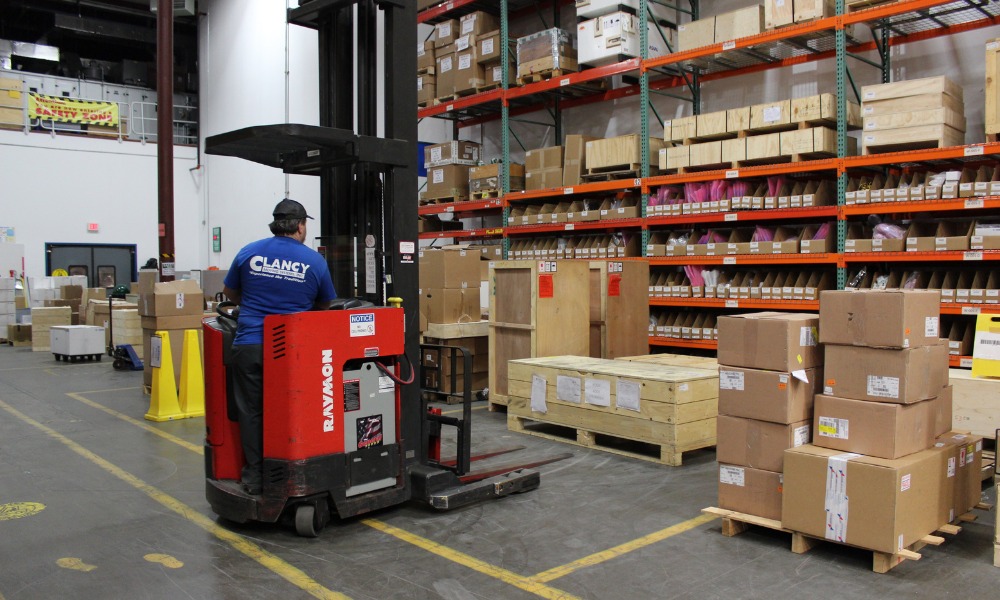
Accurate classification only holds up if the paperwork matches the shipment. Bills of lading, NMFC item numbers, actual weight, and handling-unit dimensions all need to align before freight reaches the dock.
- Update bill of lading templates so NMFC item numbers reflect the current docket
- Keep dimensional and weight records for each load in case a carrier requests a reweigh
- Coordinate booking windows with dock access and staging capacity, especially for palletized freight moving through cross-border lanes
- Confirm which docket, 2025-1, 2025-2, or 2026-1, applies to a given commodity before assuming an older class still stands
When to Bring in a Freight Brokerage Partner
Businesses that book LTL freight occasionally or move a wide mix of commodities may benefit from a freight brokerage partner that tracks NMFC updates as part of routine carrier coordination, rather than requiring the shipper to research each docket independently.
Freight brokers arranging interstate transportation must be registered with FMCSA and hold the appropriate broker operating authority. FMCSA now uses Motus: USDOT Registration System for brokers and other registrants to manage USDOT Numbers and operating authority. Confirming that a freight brokerage partner has active FMCSA registration and broker authority is a reasonable first question before handing over classification review and carrier selection for LTL freight, full truckload, or specialized equipment needs.
Frequently Asked Questions
What is the difference between an NMFC class and an NMFC item number?
An NMFC item number identifies a commodity or commodity group within the classification system, while the freight class is the numeric rating assigned to the shipment. Depending on the applicable NMFC provisions, class can reflect density along with handling, stowability, and liability characteristics.
Can two pallets of the same product have different freight classes?
Yes, depending on the applicable NMFC item and density provisions. If two pallets of the same commodity have different weights or dimensions, their pounds-per-cubic-foot values can differ enough to place them in different density brackets.
Does packaging affect LTL freight classification?
It can. Pallet dimensions, packaging, dunnage, and protrusions all affect the shipment’s total cubic footage, which changes density. Packaging can also affect handling and stowability, so shippers should classify the freight as tendered to the carrier.
What happens if a carrier reclassifies a shipment after pickup?
If the carrier’s measured weight, dimensions, NMFC item, or class differs from the booking information, it may issue a reclassification and adjust the final freight charges. Keeping accurate measurements, weight records, and classification documentation can make any resulting dispute easier to review.
Should recurring LTL shipments be rechecked after an NMFC update?
Yes. Businesses that repeatedly ship the same commodities should review their saved item numbers, class mappings, and bill-of-lading templates after relevant NMFC changes. Reusing an older classification without checking the current NMFC can create repeat billing discrepancies across multiple shipments.
Need Help Confirming Your Freight Classification Before You Book?
Clancy Relocation & Logistics operates freight brokerage services out of its New York and Connecticut network, coordinating LTL and full truckload freight for businesses across the Northeast. Our company works with established carrier partners to keep classification, documentation, and delivery aligned from booking through final delivery.
Contact our team today to review your shipment details and help confirm the applicable freight classification before your next booking.