
What’s In This Guide
- When Does Air Freight Make Sense for Albany Freight?
- Why Multimodal Planning Matters for Albany’s Position in the Freight Network
- Common Scenarios and Planning Mistakes with Air-Ground Freight Transfers
- Ground-Only vs. Air-Plus-Ground: A Mode-Selection Comparison
- How to Plan a Multimodal Air-Ground Freight Transfer
- Timing, Coordination, and Documentation Factors That Affect Air-Ground Freight
- When to Bring In a Freight Coordination Partner
- Frequently Asked Questions
- Need Help Coordinating a Time-Sensitive Freight Move Through Albany?
A shipment stuck between a tight deadline and a long haul often needs more than a truck. Albany’s position near a working air cargo facility and two major interstate corridors gives businesses a real option: pairing air freight with ground freight to close the gap between “urgent” and “on time.”
This guide breaks down when that multimodal combination actually pays off, what can go wrong at the handoff points, and how to plan a route that gets time-sensitive freight where it needs to be.
Quick Facts
- A 53,000-square-foot Air Cargo Facility at Albany International Airport, positioned near direct I-87 and I-90 access for a faster ground handoff.
- New York’s first comprehensive State Freight Plan, released in August 2019, the framework guiding statewide freight infrastructure investment across highway, rail, and multimodal routes.
- FMCSA registration and a valid USDOT number, required before the interstate ground leg of any multimodal freight transfer begins.
- Four core mode-selection variables for time-sensitive freight: delivery deadline, total distance, shipment characteristics, and number of handoff points.
- A missed ground pickup window after air cargo clears screening, the single biggest risk that erases an air freight time advantage.
When Does Air Freight Make Sense for Albany Freight?
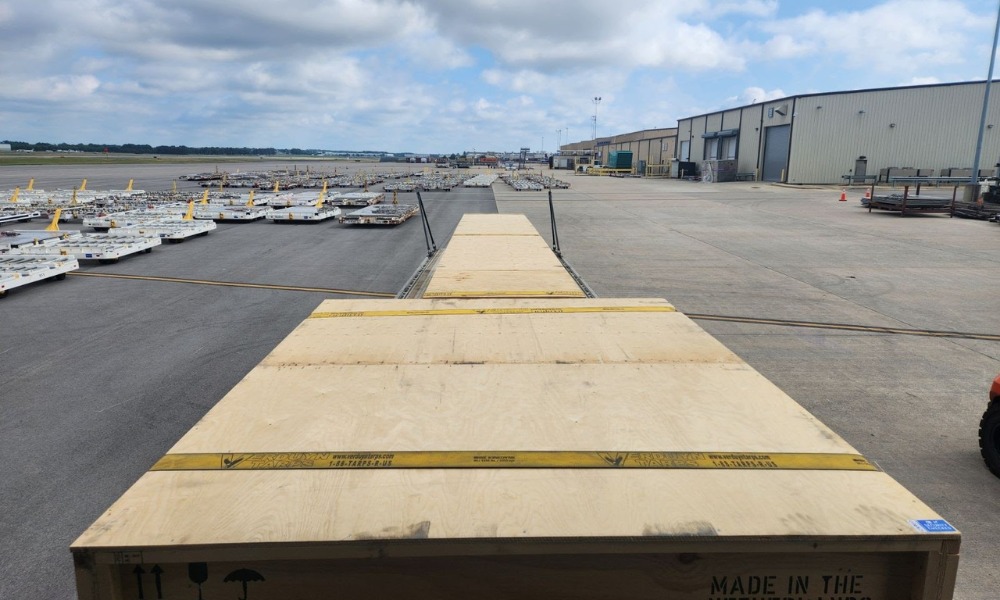
Air freight makes sense when a delivery deadline is tighter than ground transit allows, typically shipments moving several hundred miles or more within 24 to 48 hours, or cargo where a missed deadline costs more than the added freight expense. For most regional Northeast moves under a few hundred miles, ground-only freight transport usually reaches its destination faster once air cargo screening, handling, and ground handoff time are factored in.
The deciding question is not simply speed in the air. It is total door-to-door time, including the ground legs on both ends of the flight. A shipment that clears air cargo screening quickly but sits waiting for a truck at the destination airport loses much of the time advantage air freight was meant to provide.
Why Multimodal Planning Matters for Albany’s Position in the Freight Network
Albany sits at the junction of I-87 and I-90, which gives ground carriers a direct route from the airport to destinations across New York and New England. The Albany International Airport’s dedicated Air Cargo Facility sits at the northeast corner of the airfield for quick access to both highways.
That advantage only pays off when the ground leg is planned as carefully as the flight, a priority reflected in New York State’s first comprehensive freight transportation plan. A load may land in under two hours, but the drive to Boston or the Hudson Valley still has to be timed against the recovery window.
Multimodal freight beats ground-only transport only when both legs are booked as one continuous route.
READ MORE: Freight Brokerage Services in Albany, NY: When Businesses Should Use a Freight Broker
Common Scenarios and Planning Mistakes with Air-Ground Freight Transfers
Multimodal freight transfers fail less often because of the flight itself and more often because of what happens before and after it. The most common planning gaps include:
- Treating cutoff times as flexible. Air cargo facilities set fixed processing and screening cutoffs. Missing one pushes a shipment to a later flight or forces a ground-only fallback.
- Assuming belly cargo space is guaranteed. Passenger carriers at Albany International Airport, including American, Delta, Southwest, and United, carry belly freight, but that capacity competes with checked baggage and shifts by flight and season.
- Skipping recovery time in the schedule. Cargo needs a minimum amount of time after landing before it can be released to a ground carrier, and that window has to be built into the delivery promise.
- Not confirming ground pickup at both ends. A load that clears the air cargo facility but has no truck staged for pickup sits idle, canceling out the time saved in the air.
- Leaving documentation for the last minute. Interstate transfers require accurate paperwork for the ground leg, and incomplete records can hold a shipment at pickup.
Ground-Only vs. Air-Plus-Ground: A Mode-Selection Comparison
Choosing between a ground-only route and a multimodal air-plus-ground route depends on how the shipment’s urgency, distance, and handling needs stack up against one another.
|
Factor |
Ground-Only Freight |
Air-Plus-Ground (Multimodal) |
|
Typical distance |
Regional, under a few hundred miles |
Several hundred miles to cross-country |
|
Delivery window |
Same-day to a few days |
Often required within 24 to 48 hours |
|
Handoff points |
One pickup, one delivery |
Origin pickup, air cargo transfer, destination pickup, final delivery |
|
Best shipment type |
Standard freight, palletized goods, bulk items |
|
|
Weather and traffic exposure |
Route-dependent, generally lower complexity |
Adds flight schedule and airport ground-traffic variables |
|
Coordination needs |
Single-carrier scheduling |
Coordinated cutoff times, ground pickup, and final-mile delivery |
How to Plan a Multimodal Air-Ground Freight Transfer

A workable multimodal plan starts with the deadline and works backward through every handoff point.
1. Confirm the Delivery Deadline and Work Backward
Start with the exact date and time the shipment has to arrive, then subtract final-mile delivery time, air cargo recovery time, and flight duration to find the latest possible drop-off at the origin.
2. Check Air Cargo Cutoff and Recovery Times
Every air cargo facility sets a cutoff for accepting freight before a given flight, along with a recovery time before cargo can be picked up after landing. Both need confirmation before a delivery promise is made.
3. Arrange Ground Pickup on Both Ends
A truck needs to be staged at the origin before drop-off and at the destination before the recovery window closes. Coordinating both legs in advance prevents cargo from sitting idle at either airport.
4. Prepare Documentation for the Interstate Leg
Any ground carrier moving freight across state lines must be registered with federal motor carrier safety regulators and operate under a valid USDOT number, and shipment paperwork should reflect that before pickup.
5. Build In a Buffer for Weather and Traffic
Flight delays, winter weather along I-87, and traffic on I-90 during peak commuting hours can all shift a tight schedule. A buffer of a few hours protects the delivery deadline without requiring a rebooked flight.
Timing, Coordination, and Documentation Factors That Affect Air-Ground Freight
Beyond the steps above, several planning factors shape whether a multimodal route actually saves time:
- Building access and dock scheduling. Facilities teams need advance notice to reserve a loading dock or freight elevator for both the origin pickup and the final delivery.
- Shipment characteristics. Fragile, oversized, or heavy equipment may need specialized rigging or crating before it can move through either the air cargo facility or the ground leg.
- Business continuity. For equipment or inventory tied to daily operations, the cost of downtime often outweighs the added coordination required for a multimodal route.
- Coverage and valuation. High-value cargo moving across multiple handoff points benefits from confirming coverage or valuation terms before the shipment leaves the origin.
- Regulatory documentation. Interstate ground legs require accurate carrier information tied to FMCSA registration and USDOT numbers, which should travel with the freight paperwork.
When to Bring In a Freight Coordination Partner
Coordinating cutoff times, ground pickup, and final-mile delivery across multiple handoff points is a full logistics function, not a side task.
Hard Deadlines and Interstate Moves
A coordination partner is worth involving when a shipment has a hard deadline or crosses state lines. These moves leave little room for a missed handoff, so having one party manage the full route reduces the chance of a delay stacking up unnoticed.
Specialized or High-Value Equipment
The same applies to loads needing specialized handling or precise scheduling at both ends. Equipment that requires rigging, crating, or extra care during loading benefits from a coordinator who can align those needs with both the air and ground legs.
No Dedicated Logistics Team
Businesses without in-house logistics staff benefit most from a single point of contact managing the handoff between air cargo and ground transport. Without that support, tracking cutoff times, carrier schedules, and documentation often falls to someone already stretched across other responsibilities.
Tight Cutoff or Recovery Windows
Shipments with little buffer between the air cargo cutoff and the ground pickup leave almost no margin for error. A coordination partner can monitor both windows in real time and adjust the ground leg if a flight shifts.
Multi-Carrier Risk
A single shipment often touches more than one carrier, each on a separate schedule. Without one party tracking the full route, a delay in any leg can cascade into a missed delivery window, even when the flight lands on time.
Frequently Asked Questions
What is multimodal freight, and how does it differ from standard trucking?
Multimodal freight combines more than one mode of transportation, typically air and ground, to move a shipment from origin to destination. Standard truckload (FTL) or less-than-truckload (LTL) freight, by comparison, relies on ground transport for the entire route.
What is the difference between drayage and final-mile delivery?
Drayage generally covers the short ground move between an air cargo facility and a nearby hub, while final-mile delivery covers the last leg to the shipment’s actual destination. Both legs need separate scheduling in a multimodal plan.
Does multimodal freight typically cost more than standard ground freight?
Combining air cargo with ground transport can add cost compared to a ground-only route, though the difference depends on distance, urgency, and handling needs. A freight company can outline the specific factors that apply to a given shipment.
Can a multimodal freight shipment be tracked while it’s in transit?
Most freight services offer some level of shipment visibility once cargo is moving, though tracking detail can vary between the air and ground legs of a multimodal route. Confirming tracking capability in advance helps avoid gaps during handoffs.
Can specialized or temperature-sensitive cargo move through a multimodal route?
Many types of specialized cargo, including fragile, oversized, or temperature-sensitive freight, can move through a multimodal route with the right handling and equipment. Specific requirements usually depend on the cargo type and are worth confirming with a freight provider ahead of time.
Need Help Coordinating a Time-Sensitive Freight Move Through Albany?
Clancy Relocation & Logistics coordinates freight brokerage services across full truckload, less-than-truckload, and final-mile and airfreight legs for businesses managing time-sensitive shipments. Our team meets the federal requirement for any company coordinating cargo across state lines.
Contact us to plan a coordinated freight move built around your deadline.