
What’s In This Guide
- What Is an Office Relocation Risk Register?
- Why an Office Move Risk Assessment Matters for Business Continuity
- The 12-Point Office Relocation Risk Register
- How to Build a Pre-Move Risk Register in 5 Steps
- Timeline and Coordination Factors That Affect Office Relocation Risk
- When to Bring in a Professional Relocation Team
- Frequently Asked Questions
- Ready to Plan a Lower-Risk Office Move?
Corporate moving companies handle relocation logistics every day, but businesses hiring them may not anticipate every issue that can arise before the trucks arrive. An office relocation risk register gives facilities teams and project leads a structured way to identify threats, assign ownership, and prepare a response before moving day exposes a gap in the plan.
Quick Facts
- A risk register maps each threat to a trigger, an owner, a prevention step, and a contingency action, giving teams a structured way to document and manage relocation risks before moving day.
- IT cutover failures and network downtime can disrupt an office move when employees depend on immediate access to essential systems after relocation.
- FEMA’s Ready Business resources recommend identifying critical business functions and planning the resources and recovery strategies needed to restore operations after a disruption.
- Freight elevator scheduling conflicts and building access restrictions can cause moving-day delays, particularly when commercial buildings limit freight elevator or loading access.
- Assigning a single accountable owner to each risk, rather than a department, clarifies responsibility and reduces the chance that issues go untracked.
What Is an Office Relocation Risk Register?
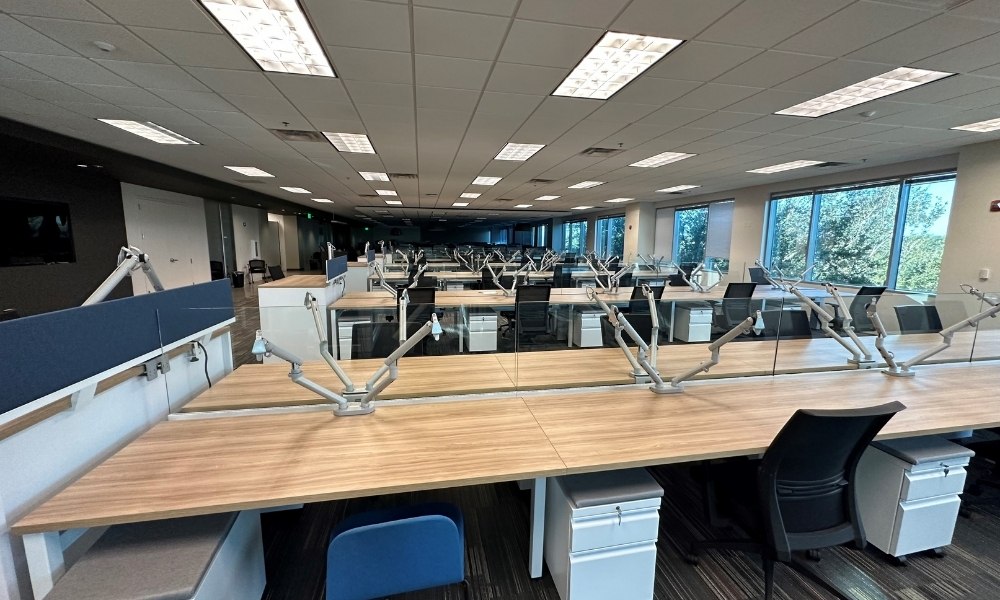
An office relocation risk register is a working document that lists each potential disruption alongside its trigger, the person responsible for managing it, a prevention step, and a contingency action if it happens anyway. It turns a vague worry like “something might go wrong with IT” into a specific, assigned, and trackable line item.
This format mirrors the risk assessment structure used in established project management practice, where teams document likelihood, impact, and response before execution begins rather than reacting mid-project.
Why an Office Move Risk Assessment Matters for Business Continuity
A relocation is a planned disruption, but planned does not mean risk-free. Downtime during an office move can lead to lost productivity, missed client communication, and delayed operations.
An office move risk assessment forces teams to confront these exposures early. FEMA’s Ready Business resources recommend identifying critical business functions and planning for continuity and recovery before a disruption occurs.
The same logic applies directly to a move: if a function cannot tolerate more than a few hours of downtime, it needs a contingency plan before the moving trucks are even booked.
For businesses relocating within a dense market, coordination extends beyond internal teams. NYC Emergency Management’s Ready New York for Business planning toolkit recommends listing critical business activities, key vendors, and backup locations for essential documents as part of any continuity plan, a framework that translates directly into relocation planning.
The 12-Point Office Relocation Risk Register
The table below breaks down 12 risks that can affect a corporate move, along with the trigger that sets each one off, who should own it, how to prevent it, and what to do if it happens anyway.
|
Risk |
Trigger |
Owner |
Prevention |
Contingency Action |
|
IT cutover failure |
Network or server migration scheduled during move-in |
IT lead |
Test failover systems and confirm ISP activation before move date |
Keep a temporary hotspot or backup connection on-site for day one |
|
Freight elevator conflicts |
No reserved elevator window with building management |
Facilities manager |
Confirm elevator reservation in writing weeks in advance |
Build a buffer window into the schedule for delayed access |
|
Vendor delivery delays |
Furniture or equipment vendor missing the confirmed window |
Move coordinator |
Confirm delivery windows with all vendors seven to ten days out |
Have a secondary vendor contact or rescheduled delivery slot ready |
|
Missing or misplaced equipment |
Inventory not tagged or tracked during packing |
Operations lead |
Use a numbered inventory list with item-level tracking |
Assign a team member to audit inventory against the list on arrival |
|
Building access restrictions |
Required vendor documentation not submitted to the new building |
Facilities manager |
Submit required building documentation before the scheduled date |
Keep a digital copy of all documentation accessible on moving day |
|
Furniture installation delays |
Custom or backordered furniture arriving after move-in |
Project lead |
Order long-lead furniture well ahead of the move date |
Stage temporary furniture solutions for the transition period |
|
Weather disruptions |
Severe weather on the scheduled move date |
Move coordinator |
Build a weather contingency date into the original timeline |
Reschedule with the moving provider using the built-in buffer |
|
Internal communication failures |
No single point of contact for employee questions |
HR or office manager |
Designate one internal contact for all move-related questions |
Send a same-day update to all staff if plans change |
|
Parking and loading zone conflicts |
Loading access, curb-use rules, or required permits not confirmed before moving day |
Facilities manager |
Confirm loading-zone rules, building access requirements, and any required permits with the appropriate authority ahead of time |
Identify an alternate loading location as backup |
|
Confidential document exposure |
Files packed without a chain-of-custody process |
Compliance lead |
Assign document handling to a designated team or provider |
Conduct an immediate inventory check if any file is unaccounted for |
|
Timeline compression from limited lease overlap |
New space becomes available only shortly before the old lease ends |
Project lead |
Confirm lease overlap dates before finalizing the move schedule |
Arrange short-term storage or staging for excess inventory |
|
Underestimated move scope |
Inventory or square footage assessed inaccurately before quoting |
Move coordinator |
Request an on-site walkthrough before finalizing the move plan |
Adjust crew size or timeline once the discrepancy is identified |
Material handling safety should also be addressed during move planning, particularly for moves involving heavy furniture, server racks, or industrial equipment.
OSHA’s guidelines for safe material handling practices state that the weight, size, and shape of the material being moved should determine the type of mechanical equipment used and that the equipment’s rated capacity should not be exceeded.
READ MORE: Commercial Movers vs Moving Brokers: What’s Right for Your Business?
How to Build a Pre-Move Risk Register in 5 Steps
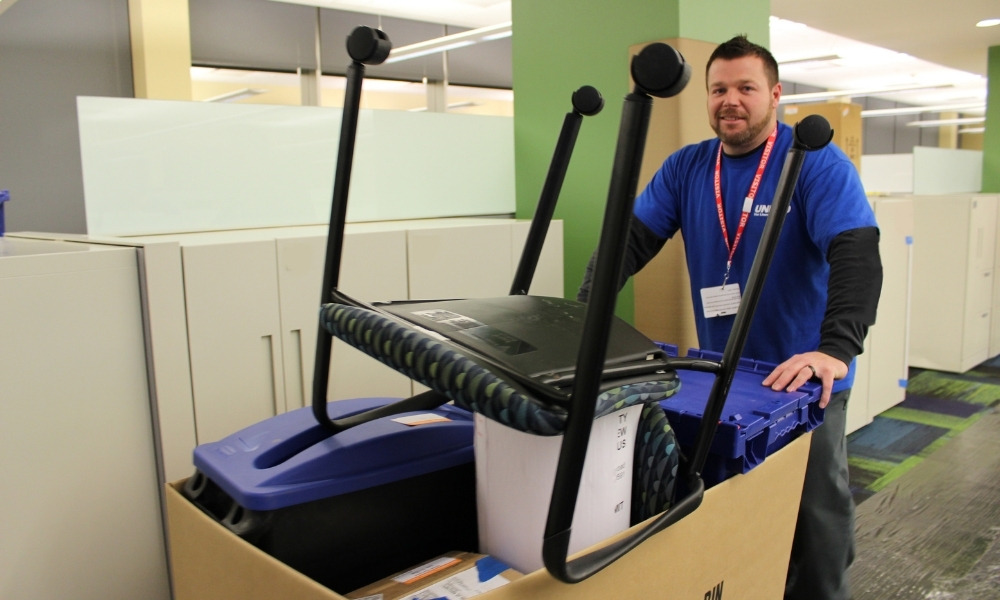
Step 1: List Every Business-Critical Function
Start with the activities that cannot pause without measurable business impact, such as client-facing systems, payroll processing, or production schedules. Rank each by how quickly it needs to be operational again after the move.
Step 2: Assign One Owner per Risk
A named owner clarifies responsibility and reduces the chance that delays or follow-up actions go untracked.
Step 3: Document Triggers, Not Just Outcomes
Instead of writing “IT could fail,” document what specifically would cause that failure, such as a missed ISP activation date or an untested server migration. Specific triggers make prevention steps actionable.
Step 4: Build Prevention and Contingency Steps for Each Line
Every risk needs two responses: a step that prevents it and a fallback if prevention fails. A register with only prevention steps leaves teams unprepared when something still goes wrong.
Step 5: Review the Register with All Stakeholders Before Moving Day
A joint review can identify gaps before moving day, when there is still time to address them.
Timeline and Coordination Factors That Affect Office Relocation Risk
Move complexity, not just move size, can significantly affect the risk profile of a corporate relocation. A single-floor office move with limited IT requirements may involve fewer coordination risks than a multi-floor relocation involving data center equipment, specialized furniture installation, or a compressed lease overlap window.
Coordination factors that typically shape the risk profile and business continuity planning include:
- Number of stakeholders involved, including facilities, IT, HR, building management, and vendors
- Building access rules, including freight elevator hours and loading dock scheduling
- Amount of specialized equipment requiring rigging or custom handling
- Overlap or gap between the old lease end date and new space availability
- Documentation requirements specific to the new building or municipality
Because these factors vary by project, a written relocation contingency plan should reflect the specific building, timeline, and scope involved rather than a generic checklist.
Scheduling an on-site walkthrough early can improve scope accuracy by allowing the moving team to verify square footage, inventory, access conditions, and handling requirements before finalizing the plan.
When to Bring in a Professional Relocation Team
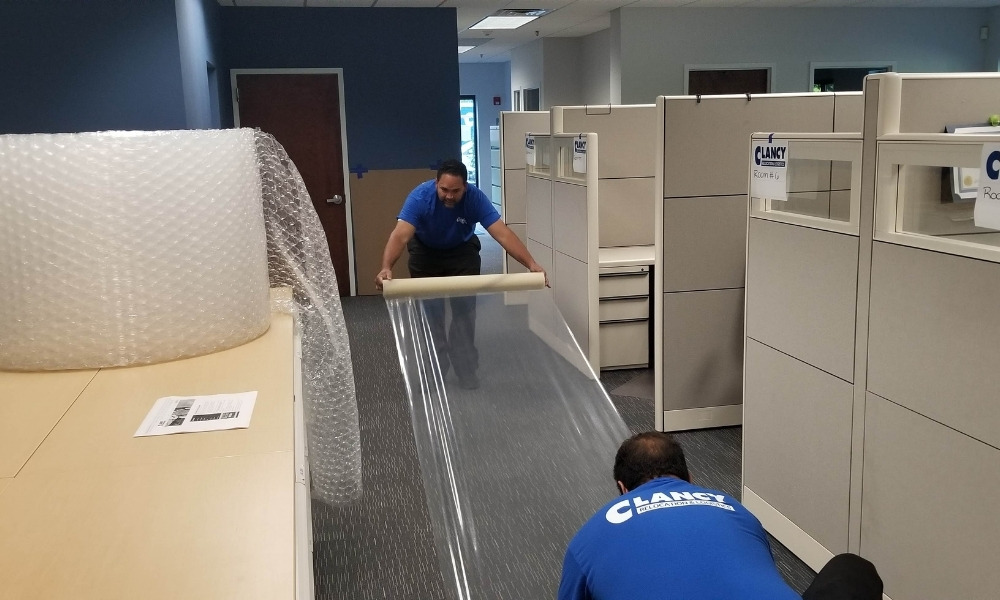
A risk register is only as strong as the team executing against it. Internal facilities staff may be able to manage a small, single-department move, while relocations involving multiple floors, data center equipment, or tight building access windows can benefit from a coordinator with direct experience managing those variables.
A professional office moving provider can provide trained crews, commercial-building experience, and a central point of contact who can coordinate adjustments if a risk on the register materializes. That structure can help teams respond more quickly to access, scheduling, vendor, or handling problems during the move.
Frequently Asked Questions
How far in advance should a business start an office move risk assessment?
The risk assessment should begin early in the relocation planning process, before major vendor, building access, and IT decisions are finalized. More complex moves generally require additional lead time to address dependencies and develop realistic contingency plans.
Who should manage the overall office relocation risk register?
A project lead, facilities manager, or move coordinator should typically maintain the master register. Individual risks can still be assigned to IT, HR, operations, or other stakeholders, but one person should be responsible for keeping the document current.
How should office relocation risks be prioritized?
Teams can prioritize risks based on factors such as likelihood, potential business impact, and how quickly affected operations need to recover. High-impact risks with limited recovery time should generally receive the most detailed prevention and contingency planning.
How often should an office relocation risk register be updated?
The register should be reviewed whenever a major part of the move changes, such as the schedule, building access requirements, vendor commitments, or IT cutover plan. It should also receive a final review with key stakeholders before moving day.
What information should be added when a new relocation risk is identified?
Document the risk, its trigger, the person responsible for it, the likely impact, a prevention step, and a contingency response. Adding these details immediately keeps the register actionable rather than turning it into a simple list of concerns.
Ready to Plan a Lower-Risk Office Move?
Clancy Relocation & Logistics has managed commercial relocations across New York and Connecticut, working directly with facilities teams to coordinate the moving parts a risk register is built to track. A dedicated move coordinator manages the project from initial planning through final setup.
Contact our team today to get started with your seamless relocation.
Related Posts